


The Hidden Costs of Poor Branding
Brand problems rarely explode—they erode performance through small, compounding inconsistencies. When decks don't match the site, social feels unlike ads, or packaging conflicts with digital, credibility slips and efficiency drops. Strong brands scale because they operate as predictable systems with room for creativity. Weak brands leak revenue and recognition without obvious attribution.
Visual Inconsistency and Customer Trust
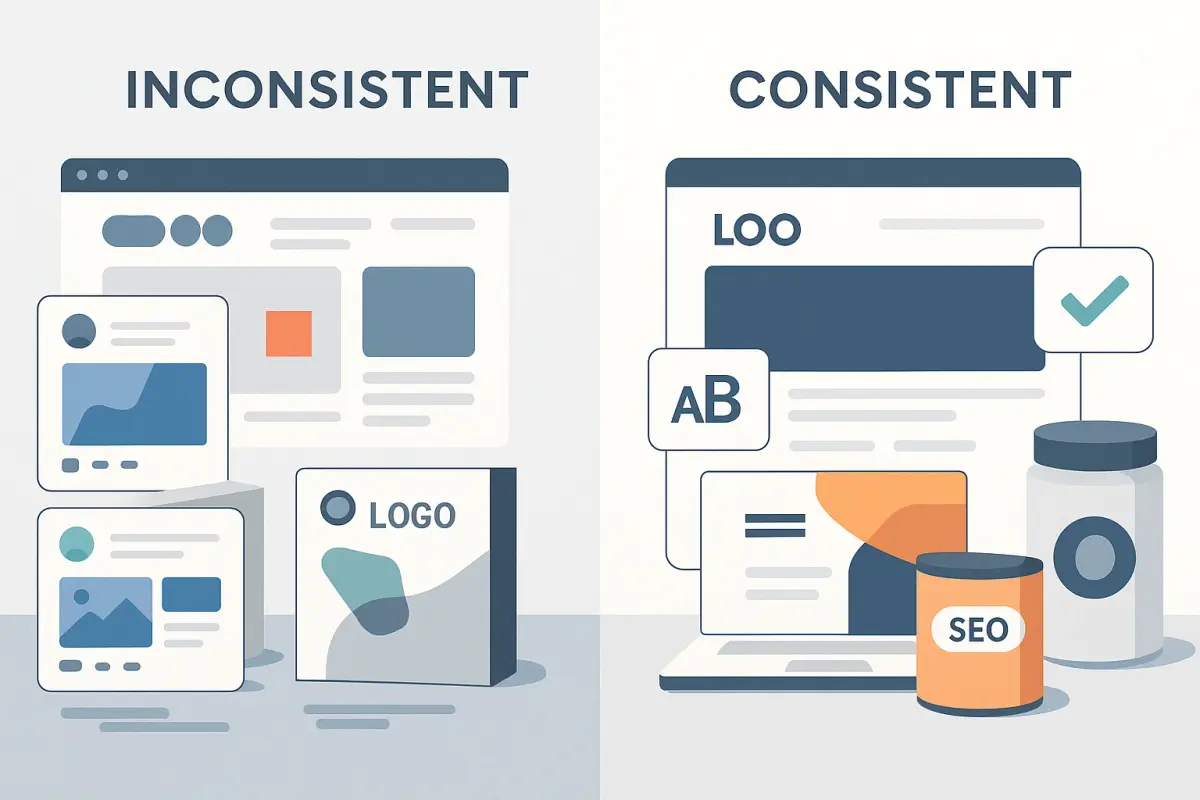
Humans rely on pattern recognition to judge credibility. Consistent colours, typography, logo usage, and layout signal stability. Flexibility still has a place—seasonal or campaign visuals can feel fresh while anchoring to signature elements (logo placement, core type, accent colour). Consistency builds recognition; intentional variation adds interest without breaking trust.
Messaging Alignment Without Over-Rigidity
Branding includes message, tone, and value propositions. Channels can vary in voice (formal site, warmer emails) as long as the core message is unified. Confusion arises when the substance shifts, not when tone adapts. Keep a message house so every channel ladders to the same promises and proof points.
Design Debt and the Cost of Reactive Branding
Performance Marketing and Brand Recognition
Clicks don't equal conversions if the landing page feels unrelated to the ad. The sweet spot: fresh creative layered over consistent cues (logo placement, palette thread, headline tone). Creative wins attention; brand signals reassure visitors they're in the right place, improving conversion and recall.
The Compounding Cost of Brand Weakness

Strategic Brand Systems for Sustainable Growth
Balancing Consistency and Creativity
Great brands aren't rigid—they're intentionally flexible. Keep the core steady and let campaigns explore. When variation feels designed (not accidental), a seasonal promo, email journey, or packaging refresh still reads unmistakably as you.