
How Can Small Businesses Choose Social Media Tools?
Managing social media has become increasingly demanding for small businesses. From planning content and scheduling posts to engaging with audiences and measuring campaign performance, maintaining a consistent online presence requires time, organisation, and the right resources.
A growing number of platforms promise to simplify these responsibilities. Businesses can now access tools for content scheduling, social media analytics, audience engagement, competitor research, and AI assisted content creation. However, choosing the right platform is not simply a matter of selecting the tool with the most features.
For small businesses operating with limited budgets and marketing resources, the real challenge is identifying which tools address their needs, improve their workflows, and contribute to meaningful business outcomes. Understanding how to evaluate these platforms can help businesses make informed decisions without investing in unnecessary subscriptions.
Why Are Small Businesses Investing in Social Media Management Tools?
Social media has become an important channel for businesses looking to build brand awareness, engage customers, and generate enquiries. However, managing several platforms simultaneously can create operational challenges.
A business maintaining an active presence on Instagram, Facebook, LinkedIn, and TikTok may need to manage different content formats, publishing schedules, audience expectations, and performance metrics. Without an organised process, these responsibilities can become difficult to manage consistently.
Social media management tools can help centralise publishing, organise content calendars, monitor engagement, and simplify reporting. Some platforms also offer collaboration features that allow teams to review content, manage approvals, and coordinate campaigns.
However, businesses should first identify their most pressing challenges before investing in additional software. A clear understanding of existing workflows makes it easier to determine which features will provide genuine value.
What Should Businesses Look for in a Social Media Management Tool?
A useful social media management tool should solve a specific operational or marketing problem. For example, a small business struggling to publish consistently may benefit most from content scheduling and calendar management, while a business focused on generating leads may prioritise analytics and conversion tracking.
Businesses should evaluate platforms based on several practical considerations.
Evaluating these factors helps businesses distinguish between features that support their objectives and those that add complexity without improving results.
Are Expensive Social Media Management Tools Worth the Investment?
A higher subscription price does not automatically indicate better value. More expensive platforms may provide advanced analytics, additional social account integrations, competitor tracking, approval workflows, and comprehensive reporting. However, these capabilities are only worthwhile when they address the business's actual requirements.
A small business managing two social media accounts may not need the same platform as an organisation coordinating multiple brands and marketing campaigns. Similarly, a business with a dedicated marketing team may benefit from collaboration and approval features that provide little value to a founder managing social media independently.
Businesses should therefore compare subscription costs against expected usage, time savings, and operational benefits. Free plans and trial periods can also help teams evaluate a platform before making a financial commitment.
The important question is not whether a tool offers more features, but whether those features justify the additional cost and contribute to more effective marketing operations.
How Can Businesses Measure the ROI of Social Media Tools?
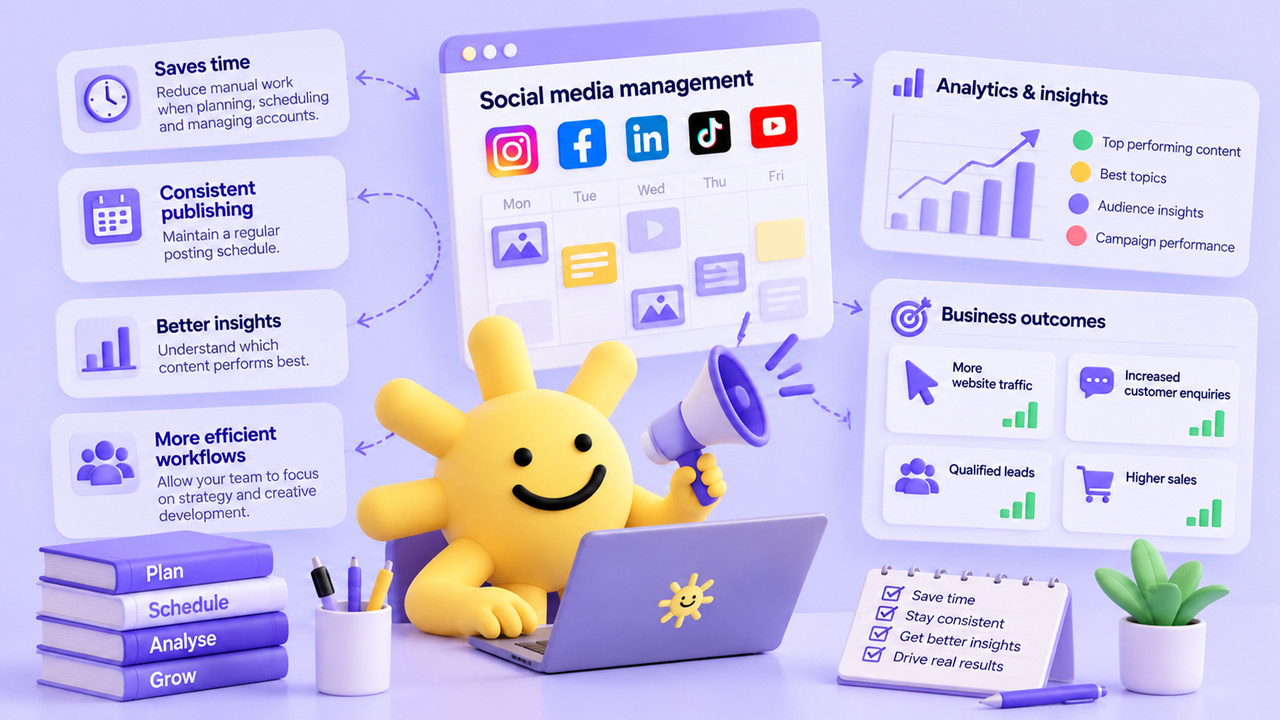
The return on investment (ROI) of a social media management tool should be measured by how effectively it improves operational efficiency and contributes to business performance. While a platform may not directly generate sales, it can create value by reducing manual work, improving publishing consistency, and helping marketing teams make more informed decisions.
Businesses can evaluate this value by examining how much time the tool saves when planning content, scheduling posts, managing accounts, and preparing performance reports. They should also consider whether the platform helps maintain a consistent publishing schedule and provides useful insights into which content formats, topics, and campaigns perform best. Most importantly, businesses should assess whether these improvements contribute to meaningful outcomes, such as increased website traffic, customer enquiries, qualified leads, or sales.
For example, a scheduling tool may reduce the time spent on manual publishing each month, allowing the marketing team to focus on strategy and creative development. Similarly, an analytics platform may help identify content that consistently attracts relevant website visitors, enabling the business to refine its content strategy and allocate resources more effectively.
Ultimately, businesses should compare these benefits against subscription costs and implementation effort. This provides a clearer basis for determining whether a platform delivers sufficient value to justify the investment.
Does Using More Social Media Tools Improve Performance?
Using multiple platforms does not automatically produce better marketing results. Businesses may subscribe to separate tools for scheduling, analytics, design, social listening, and reporting. Although each platform may offer useful capabilities, managing several disconnected systems can create additional complexity.
Teams may end up duplicating work, switching between dashboards, or reviewing overlapping performance reports. These inefficiencies can undermine the productivity improvements the tools were intended to provide.
A more effective approach is to identify the essential functions required by the business and determine whether existing platforms already provide them. For example, a small business might combine a content planning tool, a design platform, and the native analytics available on its social networks. A business with more complex reporting requirements may benefit from an integrated management platform.
The right combination depends on the team's workload, available budget, and marketing objectives. By prioritising complementary capabilities over the number of subscriptions, businesses can build a more efficient and cost effective marketing technology stack.
Should Small Businesses Use AI Powered Social Media Tools?
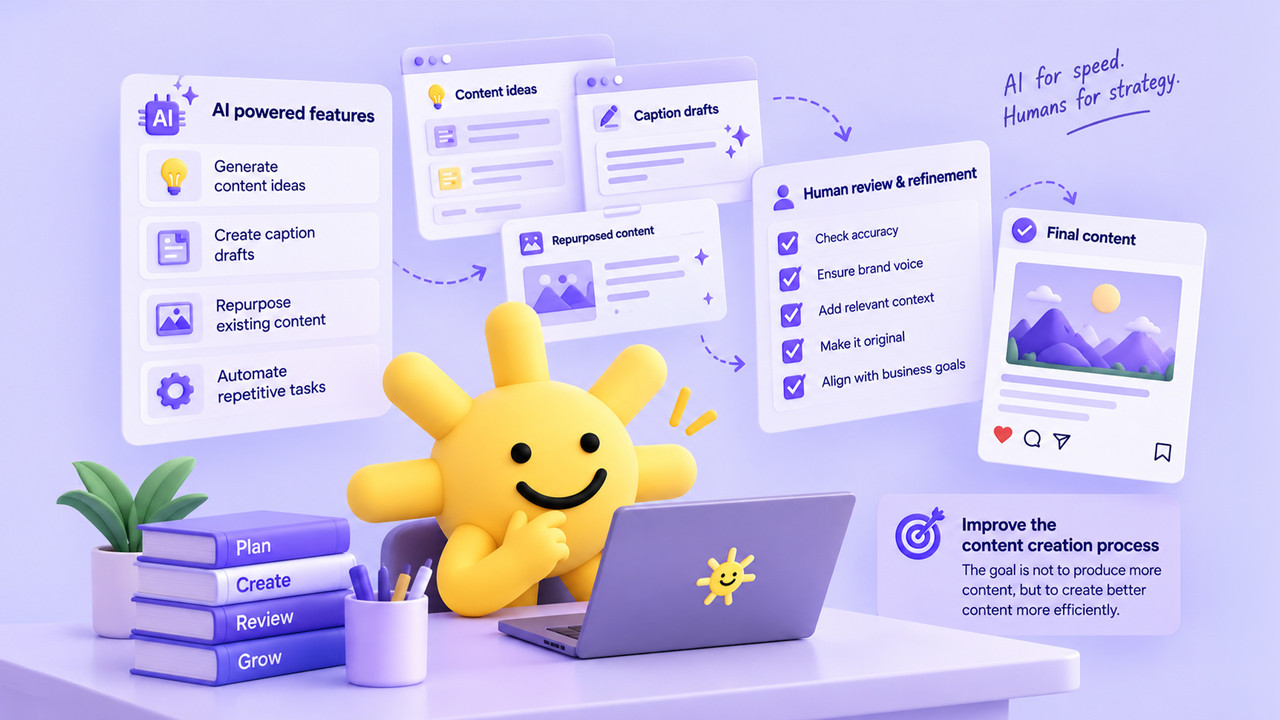
AI powered features can help businesses generate content ideas, develop caption drafts, repurpose existing content, and accelerate repetitive tasks. These capabilities can be particularly useful for small teams with limited resources.
However, automation should not replace strategic thinking or human judgement. AI generated content may lack a brand's distinctive voice, overlook important context, or produce generic messaging that fails to connect with the intended audience.
Businesses should evaluate AI features based on whether they improve efficiency while maintaining content quality and brand consistency. A practical workflow is to use AI for initial ideas and repetitive tasks, followed by human review to ensure accuracy, relevance, originality, and alignment with the brand's objectives.
This approach allows businesses to benefit from automation without compromising the quality of their communication. The objective should be to improve the content creation process rather than simply increase the volume of content published.
How Should Businesses Evaluate Social Media Management Services?
Choosing the right tools is only one part of developing an effective social media strategy. Businesses must also determine whether they have the time, expertise, and internal resources to manage their social media activities successfully.
A Social media agency can help businesses evaluate their existing processes, identify gaps in their content strategy, and determine which tools are appropriate for their objectives. This can be particularly valuable for businesses that need support with content planning, publishing, audience engagement, and performance reporting.
Before selecting a service provider, businesses should consider its approach to strategy development, reporting transparency, communication, and performance measurement. They should also establish clear expectations about deliverables, publishing frequency, responsibilities, and how success will be evaluated.
The objective is to ensure that tools and professional services work together to support a consistent and measurable marketing strategy.
What Should Businesses Consider Before Paying for a Social Media Tool?
Before committing to a subscription, businesses should establish what they expect the platform to achieve. A practical evaluation should consider current challenges, the social media channels being used, the features genuinely required, and the total cost of ownership.
Free trials and entry level plans can help businesses test whether a platform fits their workflow before making a long term commitment. During this period, teams should assess whether the tool is easy to use, whether its reports support useful decisions, and whether its features justify the cost.
Businesses should also review account limits, user restrictions, integration options, customer support, and the pricing implications of future growth. These considerations can help prevent unexpected costs and ensure the platform remains suitable as the business expands.
A Social media agency may also help businesses identify opportunities to improve their marketing workflows and establish reporting processes that connect social media activities to business objectives. However, the decision to invest in a platform should ultimately be based on practical requirements rather than popularity or the assumption that a more expensive tool will automatically deliver better results.
How Can the Right Social Media Tool Support Better Marketing Decisions?
Social media management tools can help businesses organise content, improve operational efficiency, and understand campaign performance. However, technology alone cannot compensate for an unclear strategy, inconsistent messaging, or a limited understanding of the target audience.
Businesses should evaluate their tools based on the problems they solve, the time they save, and the insights they provide. A focused set of tools that supports consistent execution and informed decision making can be more valuable than a large collection of subscriptions with overlapping features.
As social media platforms evolve and new technologies become available, businesses will continue to face more choices. The ability to distinguish genuinely useful capabilities from unnecessary features will remain essential for sustainable marketing performance.
At TSA Media Group, we help businesses approach digital marketing strategically by connecting content, audience insights, and performance measurement to meaningful business objectives. Our focus is on developing strategies that support brand visibility, audience engagement, and measurable commercial growth.
Share this Blog