

How Do Content Gaps Quietly Limit Long Term Organic Growth?
Many businesses continue publishing content consistently yet still experience slower organic growth, unstable rankings and limited search visibility over time. In many cases, the underlying issue is not content frequency itself but gaps within the broader content ecosystem.
Content gaps occur when important topics, supporting subjects or stages within the search journey are missing from a website's content ecosystem. These gaps are not always visible immediately because primary pages may still perform adequately in isolation. However, over time, missing content weakens authority signals and limits how search engines understand expertise across broader topics.
For businesses investing in SEO web development, identifying and addressing content gaps becomes essential for maintaining long term visibility and sustainable organic growth.
How Content Gaps Weaken Topical Authority Over Time?
Search engines increasingly evaluate content ecosystems rather than individual pages alone.
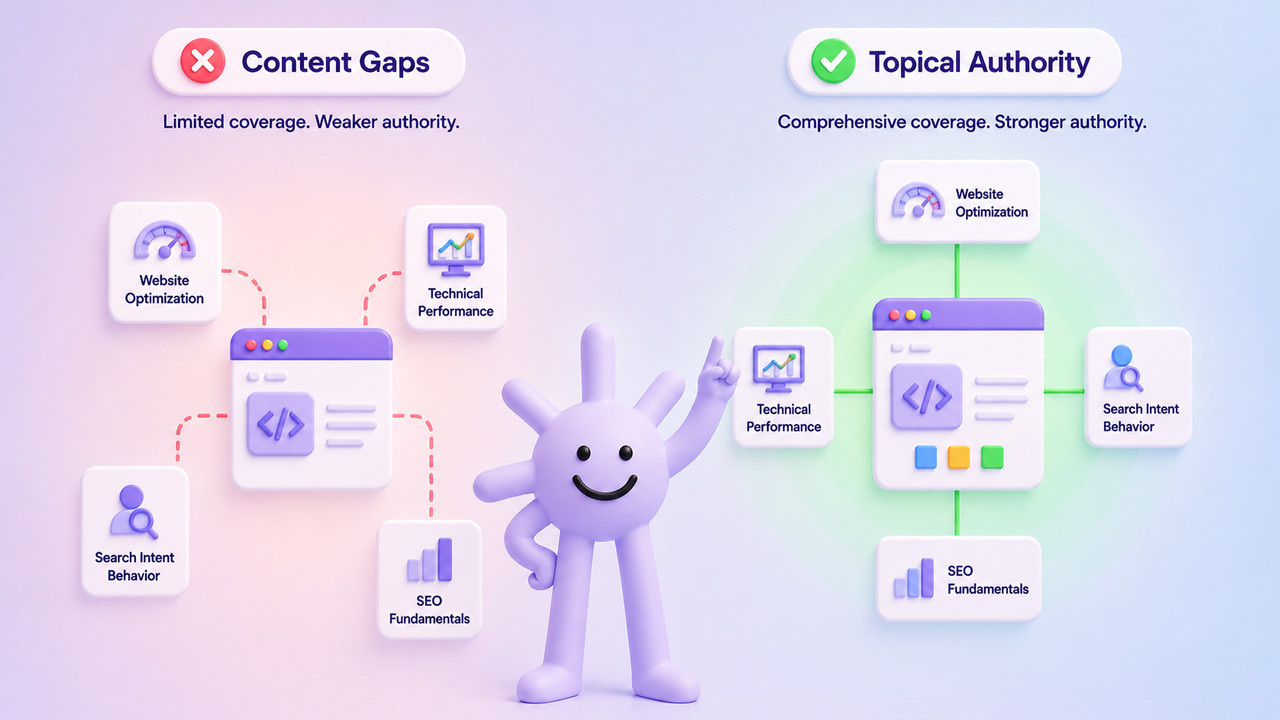
Topical authority develops when a website demonstrates comprehensive coverage around a subject area. Strong authority is not created by publishing isolated pages targeting individual keywords. Instead, authority grows when supporting content reinforces broader themes and establishes subject depth.
When content gaps exist, search engines may struggle to interpret a website as a complete source of expertise.
For example, a business may publish pages about website development services but overlook supporting topics involving website optimization, technical performance search intent behavior or SEO fundamentals.
Over time, incomplete topic coverage creates weaker authority signals because competitors with broader content ecosystems demonstrate deeper relevance.
Why Missing Intent Stages Reduce Search Visibility?
Users rarely move from awareness to conversion through a single search query.
Most search journeys involve multiple stages where users explore problems, evaluate options and compare solutions before making decisions.
When businesses only focus on bottom funnel content, they often miss opportunities to capture users earlier in the journey.
Missing intent stages create visibility gaps because search engines recognize that important user needs remain unaddressed.This reduces opportunities to appear across broader search experiences and limits traffic growth potential.
How Weak Supporting Content Affects Ranking Stability?
Primary pages rarely operate independently.
Supporting content helps reinforce context and establish stronger relationships between topics. This improves internal linking structures and helps search engines understand content hierarchy.
When supporting content is weak or incomplete, ranking stability often becomes more difficult to maintain.
Pages may initially perform well but become increasingly vulnerable to competitors that develop stronger supporting ecosystems.
Weak supporting content also limits opportunities for broader keyword visibility because surrounding topic relationships remain underdeveloped.
Why Changing Search Behavior Creates Hidden Content Opportunities?
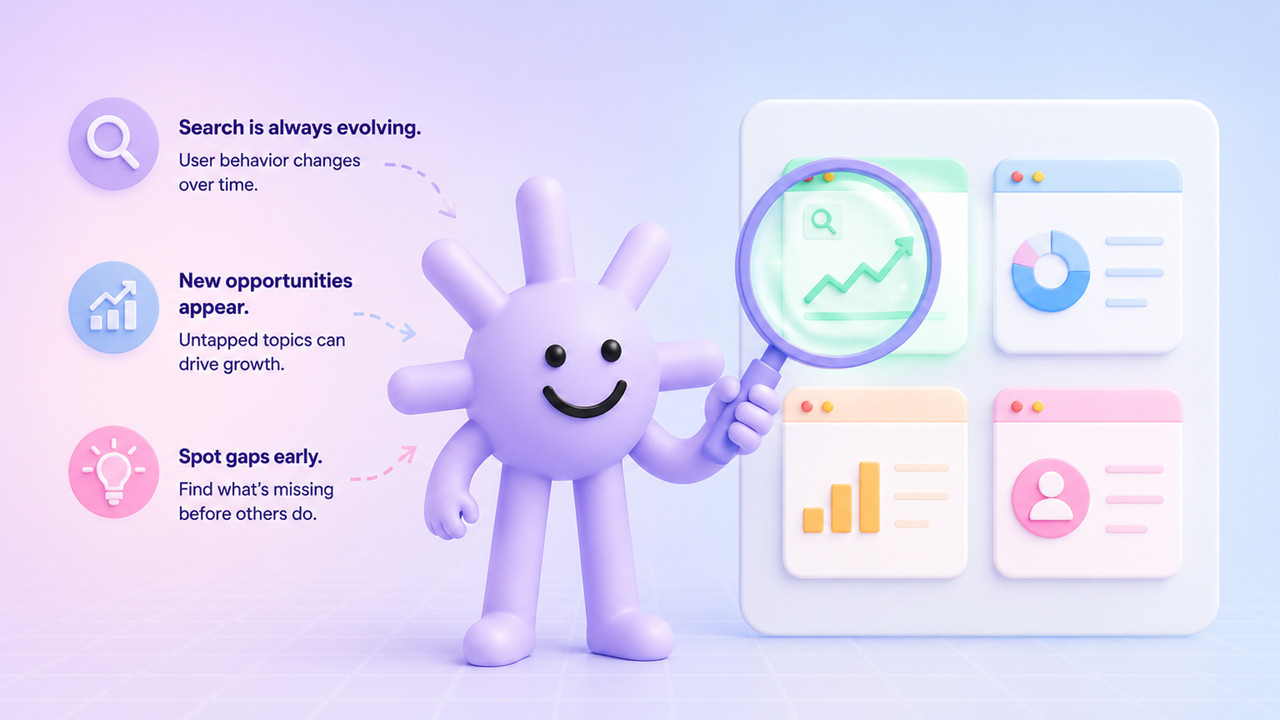
Search behavior constantly evolves.
Audience interests shift, industries change and new questions emerge over time. Content strategies that remain static often miss developing search opportunities that competitors begin targeting.
Content gaps frequently appear because businesses continue focusing on previously successful topics while ignoring changes in user behavior.
This creates hidden opportunities where growing search demand remains underserved.
Organizations that regularly evaluate content ecosystems can identify developing topics before competition increases significantly.
How Competitors Gain Visibility Through Overlooked Queries?
Competitors often increase visibility by identifying opportunities that others overlook.
Rather than competing only for primary commercial keywords, many successful SEO strategies focus on supporting searches, informational questions and emerging content areas.
Over time, this broader coverage expands authority and creates additional traffic pathways.
A competitor that consistently answers overlooked user questions may gradually strengthen topical relevance while attracting larger audiences across related search categories.
This improves overall visibility and increases the likelihood of stronger long term ranking performance.
Why Strategic Content Planning Supports Long Term Growth?
Long term SEO performance depends on content structure rather than content volume alone.
Publishing large amounts of content without a defined strategy often creates disconnected content ecosystems where pages compete for attention instead of reinforcing one another. While individual pages may generate temporary visibility, fragmented content structures rarely build sustainable authority.
Strategic content planning creates relationships between topics, search intent and user behavior. Instead of treating every page as an isolated asset, it builds a connected ecosystem where supporting content strengthens broader themes and reinforces subject expertise.
This allows businesses to identify emerging opportunities, expand visibility across multiple search journeys and strengthen content hierarchy through more meaningful internal relationships.
Over time, these interconnected structures create stronger authority signals, improve ranking consistency and establish a more resilient foundation for sustainable organic growth.
At TSA Media Group, we approach SEO web development through structured content planning designed to strengthen authority and identify hidden growth opportunities. By analyzing content ecosystems, search behavior and topical relationships, we help businesses build long term organic strategies that improve visibility and support sustainable performance.
Share this Blog