

How Do You Define a Clear Creative Direction for Campaigns?
Creative campaigns often fail long before they reach an audience. In many cases, the issue is not weak design or poor execution but the absence of a clearly defined creative direction.
Without structure, campaigns become inconsistent across visuals, messaging and tone. Different teams interpret the brand differently, resulting in disconnected creative assets that weaken audience recognition and reduce campaign effectiveness over time.
A clear creative direction creates alignment. It establishes how a brand should communicate visually and strategically across platforms while ensuring every campaign supports broader business objectives.
For businesses working with paid media agencies , this clarity becomes especially important because campaign performance depends heavily on consistency between creative strategy, audience targeting and brand communication.
Define Clear Brand Positioning to Guide Creative Direction
Creative direction begins with positioning.
Before visuals, headlines or campaign concepts are developed, brands must understand how they want to be perceived within the market. Without this foundation, creative decisions become subjective and inconsistent.
Brand positioning influences tone of communication, visual identity, campaign messaging, audience perception and emotional response.
When positioning is clearly defined, creative teams can make decisions that consistently reinforce the same strategic identity across campaigns.
For example, a brand positioned around reliability and operational trust requires a very different creative approach from a brand focused on disruption or entertainment.
Within campaigns managed by paid media agencies, positioning acts as the control system that keeps creative execution aligned across multiple channels and formats.
Clarify Messaging to Shape Consistent Visual Storytelling
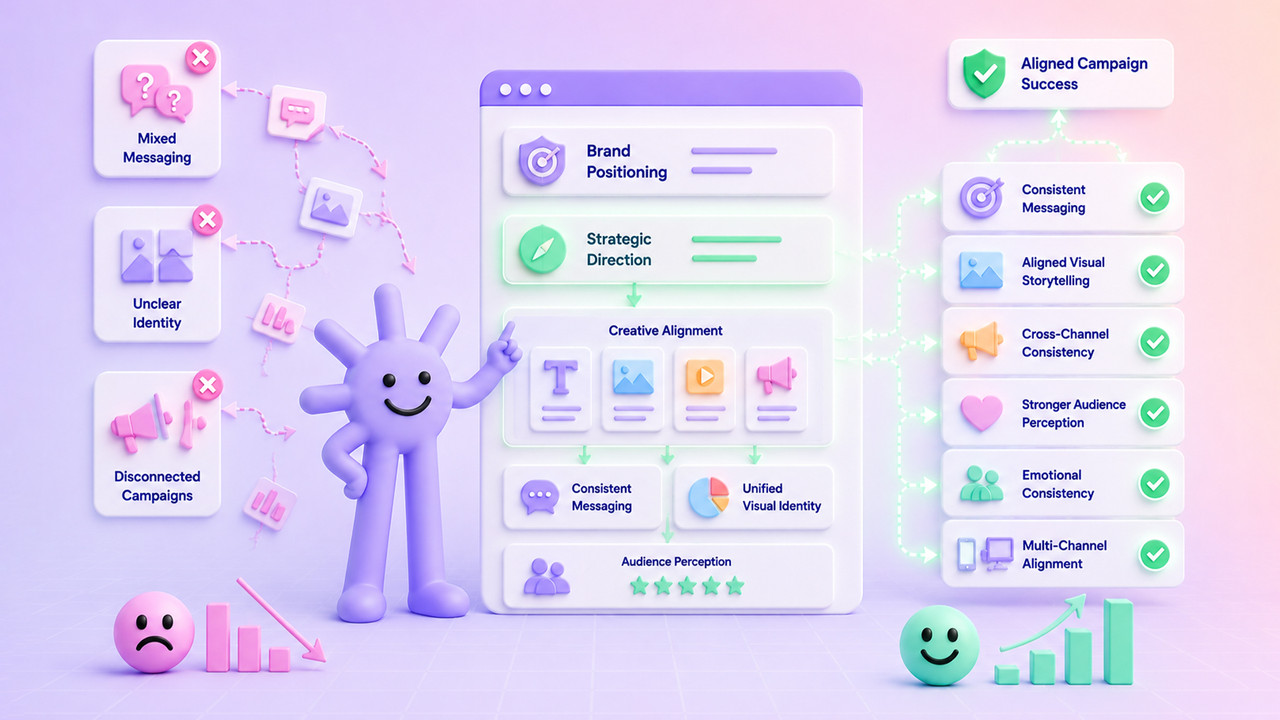
Visuals alone do not create strong campaigns. Messaging structure determines how audiences interpret what they see.
When messaging lacks clarity, campaigns often become visually attractive but strategically weak. Audiences may notice the creative but fail to understand the actual value being communicated.
A clear creative direction establishes core communication themes, audience pain points, campaign narrative structure, tone consistency and messaging priorities.
This improves visual storytelling because every creative element supports the same communication objective rather than competing for attention.
Consistency in messaging is especially important when working with paid media agencies because campaigns are frequently adapted across multiple platforms, audiences and ad formats.
Without structured messaging, platform variations can easily create fragmented brand experiences.
Use Audience Insights to Inform Creative Decisions
Creative direction should not rely solely on internal assumptions about what looks appealing.
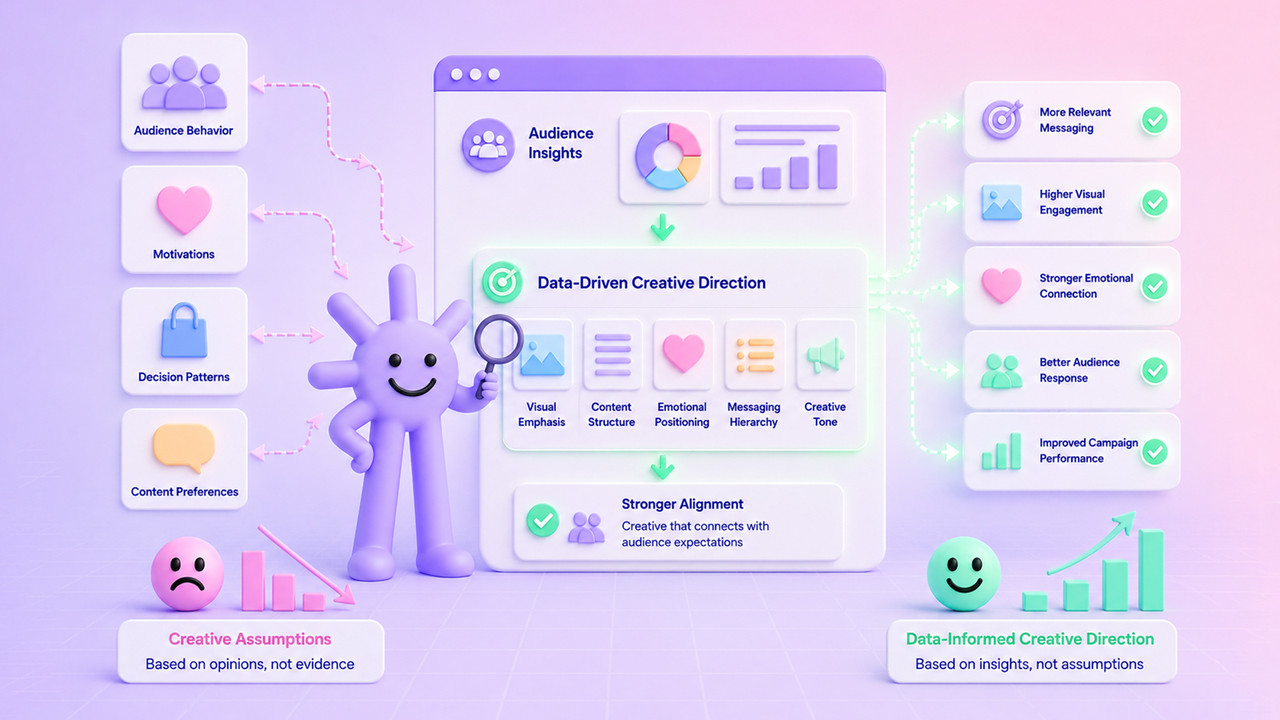
Audience behavior, motivations and decision making patterns provide essential context for creative development. Campaigns become more effective when creative decisions are informed by how audiences actually respond rather than by personal preference alone.
Audience insights help to shape visual emphasis, content structure, emotional positioning, messaging hierarchy and creative tone.
This creates stronger alignment between campaign communication and audience expectations.
For paid media agencies, audience driven creative direction also improves campaign optimization because messaging and visuals are developed around measurable behavioral patterns rather than generalized creative assumptions.
Maintain Consistency to Strengthen Brand Recognition
One of the biggest challenges in campaign development is maintaining consistency across different touchpoints.
Campaigns often evolve across social media, display advertising, landing pages, video formats, retargeting campaigns and email communication.
Without a defined creative direction, these assets gradually become disconnected from one another.
Consistency does not mean identical execution across every platform. It means maintaining recognizable visual and strategic alignment even when formats change.
Typography, color systems, layout structure, visual hierarchy and messaging tone should remain coordinated so audiences experience continuity across campaigns.This consistency strengthens recognition and improves long term brand recall.
For businesses working with paid media agencies, structured creative systems also improve operational efficiency because campaign production becomes more scalable and easier to manage across teams.
Continuously Test and Refine Creatives
Creative direction should remain structured, but it should not remain static.
Audience behavior changes over time, platform dynamics evolve and campaign performance shifts based on competition and market conditions.
Strong creative systems allow businesses to test and refine campaign assets without losing brand consistency. This includes evaluating messaging performance, visual engagement, conversion response, audience interaction patterns and creative fatigue.
Testing helps identify which creative approaches generate stronger engagement and conversion outcomes while still remaining aligned with the broader brand direction.
Within paid media agencies, this continuous refinement process improves campaign efficiency because optimization decisions are supported by measurable performance insights rather than subjective creative opinions.
Why Clear Creative Direction Improves Campaign Performance
Creative direction functions as a strategic framework rather than simply a design preference.
When campaigns are guided by clear positioning, structured messaging, audience insight and visual consistency, communication becomes more recognizable, more scalable and more effective.
This improves campaign clarity, audience trust, brand recognition, optimization efficiency and long term marketing consistency.
By contrast, unclear creative direction leads to fragmented communication that weakens campaign performance even when media budgets increase.
At TSA Media Group, we help businesses develop structured campaign systems that align creative direction with strategic marketing objectives. By combining audience insight, visual consistency and performance focused execution, we help brands create campaigns that strengthen engagement, recognition and long term communication effectiveness.