


How Do You Set a Campaign Budget for Better ROI?
Campaign budgeting does not begin with allocation but with understanding.
Before budgets are increased, before campaigns are scaled and before returns are measured, investment first reflects assumptions. These assumptions determine how resources are distributed, often without full visibility into how effectively they align with performance.
For business leaders, relying only on outcomes such as conversions or revenue creates a delayed understanding of efficiency. By the time ROI is evaluated, the underlying budget decisions have already shaped performance.
A structured approach to budgeting introduces clarity earlier in the process, allowing organizations to align investment with actual demand, validate assumptions and respond before inefficiencies compound particularly when evaluating digital marketing agency cost.
Historical Data Establishes Budget Reality
Campaign budgets become more accurate when they are grounded in historical performance rather than expectation.
Metrics such as cost per acquisition, conversion rates and channel efficiency provide an initial reference point for understanding how much investment is required to generate outcomes. These signals reflect how audiences have responded previously, offering a baseline that reduces uncertainty.
Without this reference, budgeting often becomes disconnected from performance, leading to over investment in low yield areas or under investment in opportunities that require sufficient scale to perform.
Testing Validates Budget Assumptions
Initial budget allocations are rarely correct. They reflect hypotheses that require validation.
A structured testing phase introduces a controlled environment where different budget levels, audiences and channels can be evaluated before full scale investment. This stage reveals whether cost expectations align with actual performance conditions.
Testing shifts budgeting from static planning to adaptive decision making. Instead of committing resources based on assumptions, organizations can observe how spend translates into engagement and conversion under real conditions.
This reduces risk while improving confidence in how budgets should be scaled.
Audience Size Defines Budget Efficiency
Budget effectiveness is directly influenced by the size and nature of the audience it is intended to reach.
Allocating large budgets to limited audiences often leads to diminishing returns, where frequency increases without improving outcomes. Conversely, under funding broader audiences restricts reach, preventing campaigns from generating sufficient data or traction.
This introduces a structural relationship between budget and reach. Investment must be calibrated to audience capacity, ensuring that spend aligns with the volume of opportunity available.
When this alignment is absent, inefficiency is not caused by performance failure, but by misallocation.
Cost Per Acquisition Signals Scaling Potential
As campaigns progress, cost per acquisition becomes a defining signal for budget decisions.
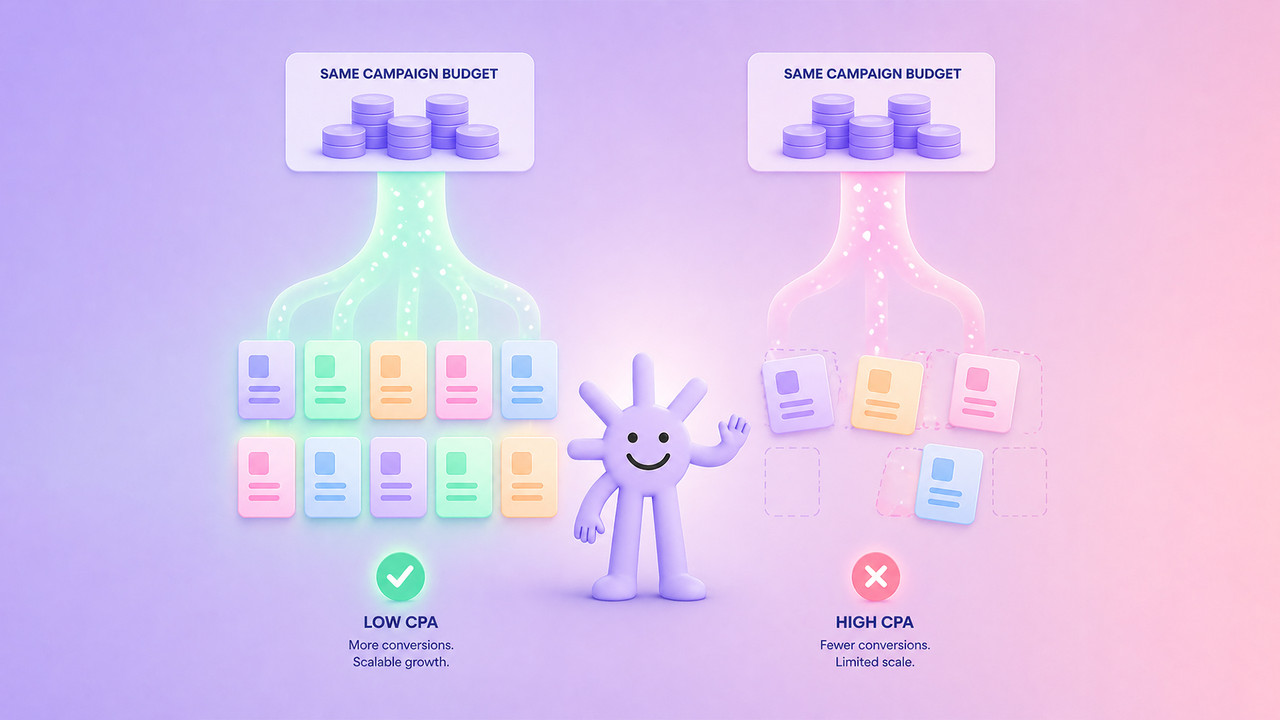
Rather than indicating performance in isolation, CPA reflects how efficiently investment converts into outcomes. When CPA remains stable or improves with increased spend, it signals that the campaign can be scaled without compromising efficiency.
However, when CPA rises as budgets increase, it indicates that the campaign is reaching saturation or encountering inefficiencies.
This reframes scaling decisions. Growth is not determined by budget availability, but by how consistently performance can be maintained as investment expands.
Channel Performance Determines Budget Reallocation
Not all channels contribute equally to results, and their effectiveness evolves over time.
Performance data reveals where engagement, conversions and efficiency are concentrated. This creates an ongoing requirement to redistribute budget toward channels that demonstrate stronger alignment with campaign objectives.
Static budget allocation limits performance. In contrast, dynamic reallocation ensures that investment follows results, reinforcing areas of strength while reducing exposure to underperforming channels.
This process transforms budgeting from a fixed structure into a responsive system.

When Campaign Budgeting Becomes Strategic Insight
Campaign budgeting is often treated as a financial exercise because it is directly tied to cost and allocation. This assumption limits its role.
In practice, budgeting reflects how well an organization understands performance, timing and opportunity. It reveals where investment aligns with demand, where inefficiencies emerge and how effectively resources are converted into outcomes.
For leadership teams, this creates a shift from reactive analysis to proactive decision making. Instead of evaluating performance after results occur, budget strategy can be adjusted based on early signals such as cost per acquisition, audience response and channel efficiency.
This changes how digital marketing agency cost is interpreted. It is no longer viewed solely as expenditure, but as a measure of how precisely investment aligns with performance.
At TSA Media Group, campaign budgeting is approached as a structured system, where data, testing and performance signals guide how investment is allocated, adjusted and scaled. By aligning budget decisions with real campaign behavior, we help businesses improve efficiency, reduce wasted spend and strengthen return on investment.
Let’s move beyond static budget planning and respond to performance as it happens.