


How Do You Set Effective KPIs for Performance Marketing Campaigns?
Performance marketing campaigns generate large amounts of data, but data alone does not improve results. The effectiveness of a campaign depends on whether the right metrics are being tracked and interpreted correctly.
Without clearly defined KPIs, businesses often focus on metrics that appear positive on the surface but provide little insight into actual business performance. This creates confusion during campaign evaluation and weakens optimization decisions over time.
Effective KPI selection creates structure by connecting campaign activity directly to measurable business outcomes. Rather than monitoring every available metric, businesses can focus on the indicators that reflect real performance and long term growth.
Align KPIs With Clear Business Objectives
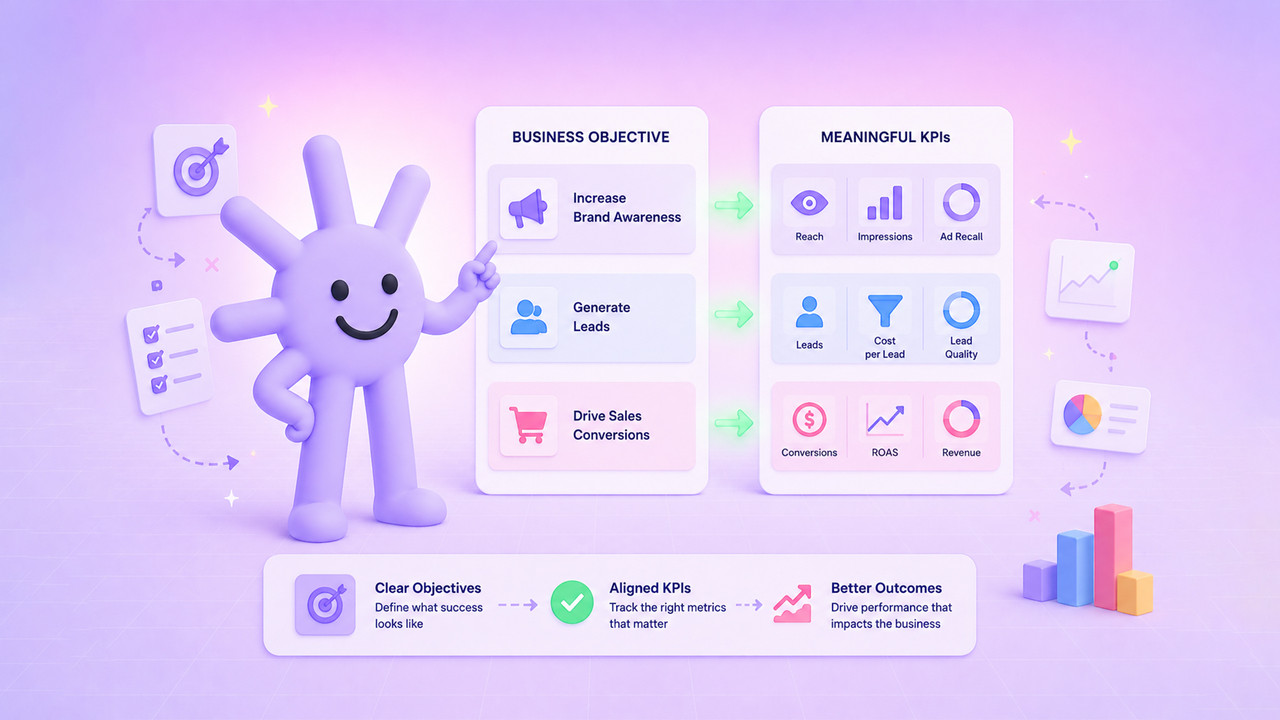
KPIs only become meaningful when they are connected to a specific business objective.
A campaign designed to increase brand awareness requires different success indicators from a campaign focused on lead generation or sales conversions. When objectives are unclear, performance reporting becomes inconsistent because teams evaluate campaigns using disconnected metrics.
For example, a campaign optimized for traffic volume may generate high click through rates while producing poor lead quality. In this situation, the KPI selection itself creates misalignment between campaign performance and business expectations.
Clear objectives establish direction for advertising campaign strategy and ensure campaign evaluation reflects actual commercial priorities rather than isolated platform metrics.
Avoid Vanity Metrics That Distort Performance
One of the most common problems in performance marketing is over reliance on vanity metrics.
High impressions, likes or clicks may appear encouraging, but they do not necessarily indicate meaningful business impact. When these metrics are prioritized without context, campaign performance can be misinterpreted.
Effective KPI frameworks focus on metrics that reflect measurable outcomes such as conversion quality, customer acquisition efficiency and return on investment rather than surface level engagement alone.
This shift improves decision making because optimization efforts are based on business impact rather than visibility metrics that lack commercial relevance.
Within advertising, avoiding vanity metrics helps businesses allocate budgets more accurately and identify which campaigns are generating meaningful results.
Focus on Conversion Driven Metrics
Performance marketing exists to produce outcomes, not simply activity.
Conversion focused KPIs create clearer visibility into how campaigns influence user behaviour and revenue generation. Metrics tied directly to conversions provide stronger signals for optimization because they measure actions rather than attention alone.
These insights help businesses understand which campaigns generate qualified leads, where users drop off in the funnel and how effectively budgets are being converted into measurable results.
When conversion metrics are prioritized, campaign optimization becomes more strategic and less reactive.
This is especially important in paid media management where platforms continuously generate large volumes of engagement data that can distract from actual business performance.
Define Channel Specific KPIs
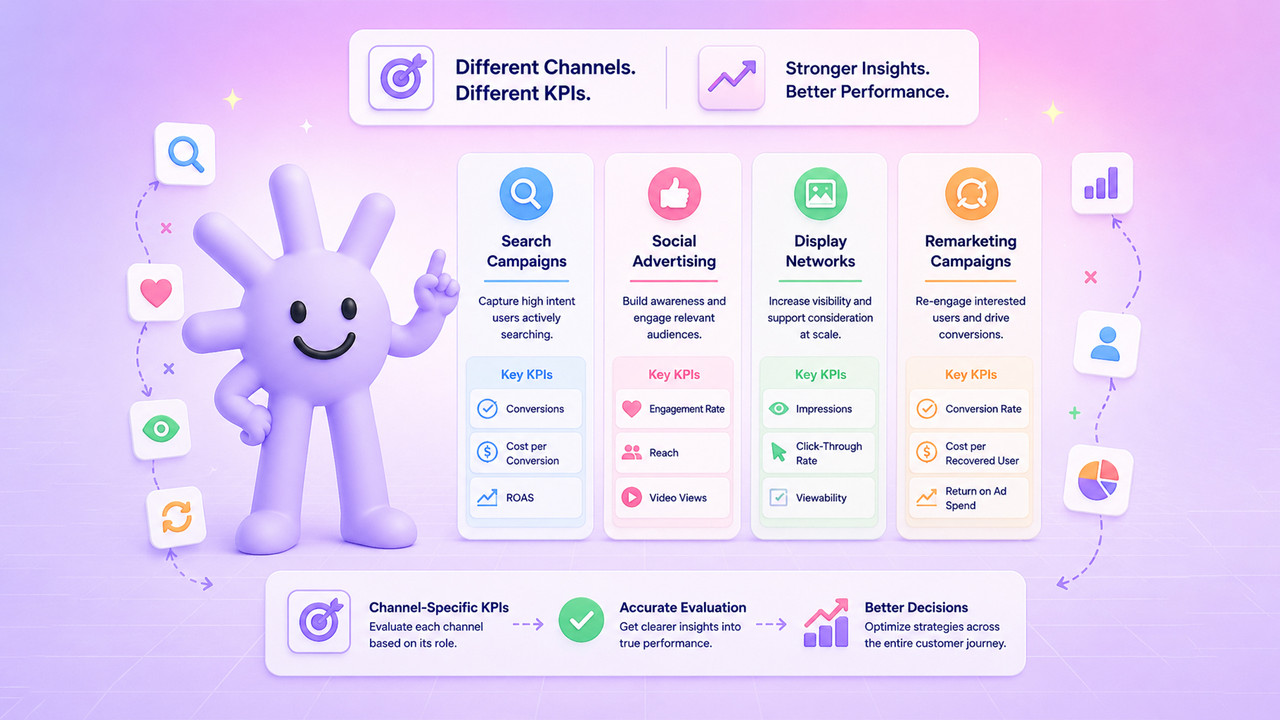
Different marketing channels serve different functions within the customer journey.
Search campaigns, social advertising, display networks and remarketing campaigns often contribute to performance in different ways. Applying identical KPIs across every channel reduces clarity because each platform influences users differently.
Search campaigns may prioritize high intent conversions, while social campaigns may focus more heavily on audience engagement and awareness development. Remarketing campaigns may be evaluated based on recovery efficiency and returning user behaviour.
Defining channel specific KPIs creates more accurate evaluation frameworks and prevents performance analysis from becoming oversimplified.
This allows paid media management strategies to remain aligned while still recognizing the unique role each platform plays within broader campaign performance.
Track Performance Continuously to Support Optimization
KPIs are only valuable when they are actively monitored and refined.
Campaign performance changes constantly due to audience behaviour, competition, platform updates and seasonal demand. Businesses that review KPIs infrequently often react too slowly to performance shifts.
Continuous monitoring allows teams to identify inefficiencies earlier, refine targeting strategies and improve budget allocation before performance declines become more significant.
This creates a more agile optimization process where decisions are driven by real-time insights rather than delayed reporting cycles.
Why Effective KPIs Improve Marketing Performance
KPIs function as a decision making framework within performance marketing.
When metrics are aligned correctly, reporting becomes clearer, optimization becomes more focused and campaign evaluation becomes significantly more accurate. This improves strategic decision making while helping businesses allocate marketing budgets more effectively.
By contrast, unclear KPIs create fragmented reporting and inconsistent optimization efforts that reduce overall marketing efficiency.
At TSA Media Group, we approach paid media management through structured performance analysis focused on measurable business outcomes. By aligning KPI selection with campaign objectives and conversion focused insights, we help businesses improve optimization clarity, campaign efficiency and long term marketing performance.