
How Should Businesses Evaluate SEO, GEO and AEO Tools?
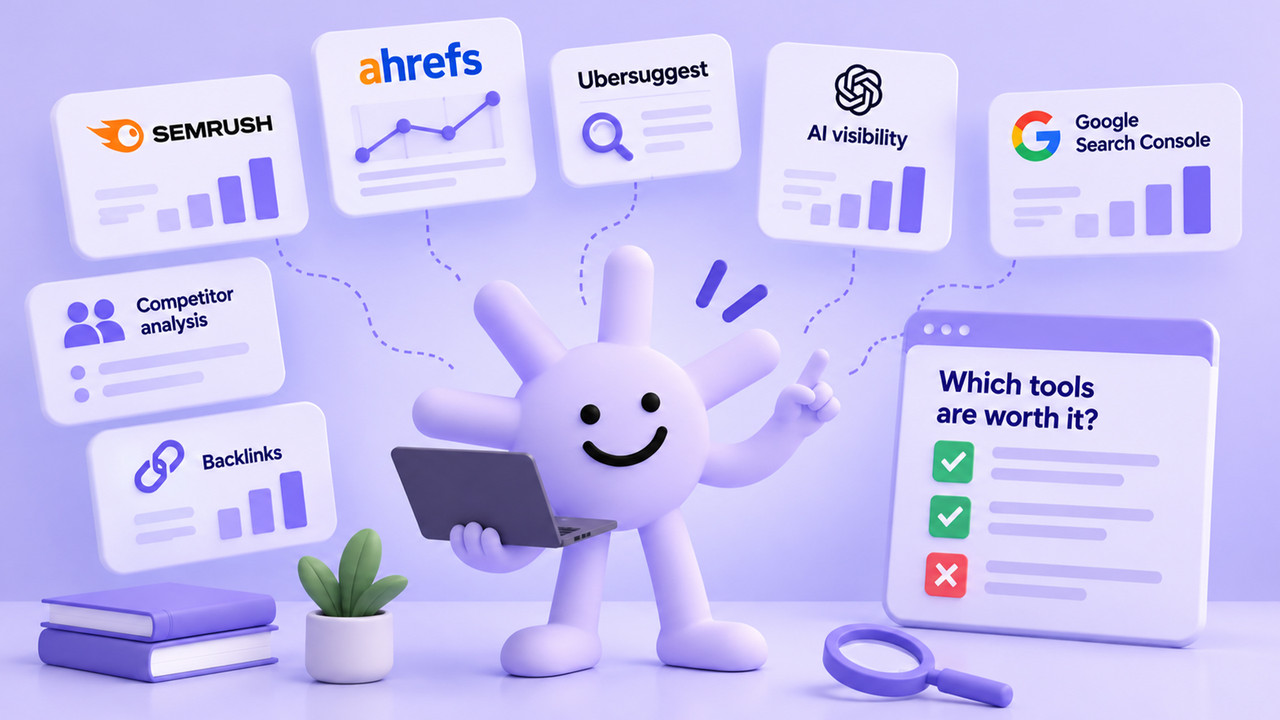
The number of tools available for search marketing has grown significantly. Businesses can now access platforms designed to analyse keywords, monitor rankings, audit websites, track backlinks, study competitors, measure AI visibility, and understand how content performs across different search environments.
However, having access to more tools does not necessarily mean having a better search strategy.
The growing interest in SEO, Generative Engine Optimisation (GEO), and Answer Engine Optimisation (AEO) has also created a new challenge for businesses: determining which tools are actually worth paying for and which simply provide additional data without improving decision making.
A search engine marketing agency can help businesses evaluate these tools based on their actual objectives rather than choosing platforms simply because they are popular or offer a large number of features.
Why Are Businesses Investing in More Search Tools?
Search has become increasingly complex. Businesses are no longer concerned only with traditional keyword rankings. They may also want to understand how their content appears in AI generated answers, whether their brand is being mentioned by generative platforms, how competitors are performing, and which content opportunities could generate future visibility.
This has created demand for specialised SEO, GEO, and AEO platforms.
The challenge is that different tools measure different things. One platform might provide detailed technical audits, while another focuses on keyword research or AI visibility. Some tools may overlap considerably, while others address highly specific requirements.
Businesses therefore need to understand what information they actually need before deciding which platforms deserve a place in their marketing stack.
What Should Businesses Look for in an SEO Tool?
A useful SEO tool should help answer a specific business question.
For example, a business may want to understand which keywords generate commercial opportunities, identify technical problems affecting its website, analyse competitors, monitor organic visibility, or identify content gaps.
The value of a tool therefore depends less on the number of features it offers and more on whether its data can support meaningful decisions.
A platform that provides hundreds of reports may have limited practical value if the marketing team rarely uses them. Meanwhile, a simpler tool that provides reliable information for a specific workflow may deliver significantly more value.
Businesses should evaluate tools according to the decisions they need to make rather than choosing the platform with the longest feature list.
Are GEO and AEO Tools Really Necessary?
GEO and AEO tools are becoming increasingly visible as businesses explore how search behaviour is changing.
These platforms may attempt to provide insights into areas such as AI visibility, brand mentions, citations, answer inclusion, or how generative systems respond to particular queries.
However, businesses should be careful when interpreting this data.
AI search technologies are developing quickly, and measurement methodologies are not as mature or standardised as some traditional SEO metrics. Different platforms may use different methodologies, datasets, prompts, or definitions when measuring AI visibility.
This means businesses should understand how a tool produces its data before treating its measurements as definitive.
The purpose of these tools should be to identify useful trends and opportunities rather than creating a false sense of precision.
How Can Businesses Measure Tool ROI?
The cost of a marketing tool is easy to identify. Its return is much harder to measure.
A subscription may appear inexpensive on a monthly basis but become costly if the platform is rarely used or produces information that does not influence decisions.
Businesses should consider whether a tool saves time, improves the quality of analysis, identifies opportunities, reduces manual work, or contributes to measurable improvements in marketing performance.
For example, a technical SEO platform may justify its cost if it helps a team identify and resolve significant website problems. A keyword research platform may be valuable if its insights consistently contribute to content that attracts qualified visitors and leads.
The important question is not simply “How much does this tool cost?” but “What business decision does this tool help us make?”
Does More Data Mean Better SEO?
More data can sometimes create the opposite of clarity.
Marketing teams can become overwhelmed by ranking changes, keyword movements, backlinks, traffic fluctuations, competitor reports, technical warnings, and other metrics.
Without a clear framework, teams may spend more time monitoring dashboards than improving the website.
A strong search strategy requires prioritisation. Businesses need to distinguish between metrics that are useful for decision making and information that is interesting but unlikely to change what they do.
Tools should therefore support a strategy rather than become the strategy themselves.
Should Businesses Use Multiple SEO Tools?
There is no requirement for a business to rely on a single platform.
Different tools can provide different perspectives, and using multiple sources can sometimes help validate important findings. However, subscribing to several overlapping platforms can also create unnecessary costs.
Businesses should first identify the capabilities they already have and determine whether another tool genuinely adds something new.
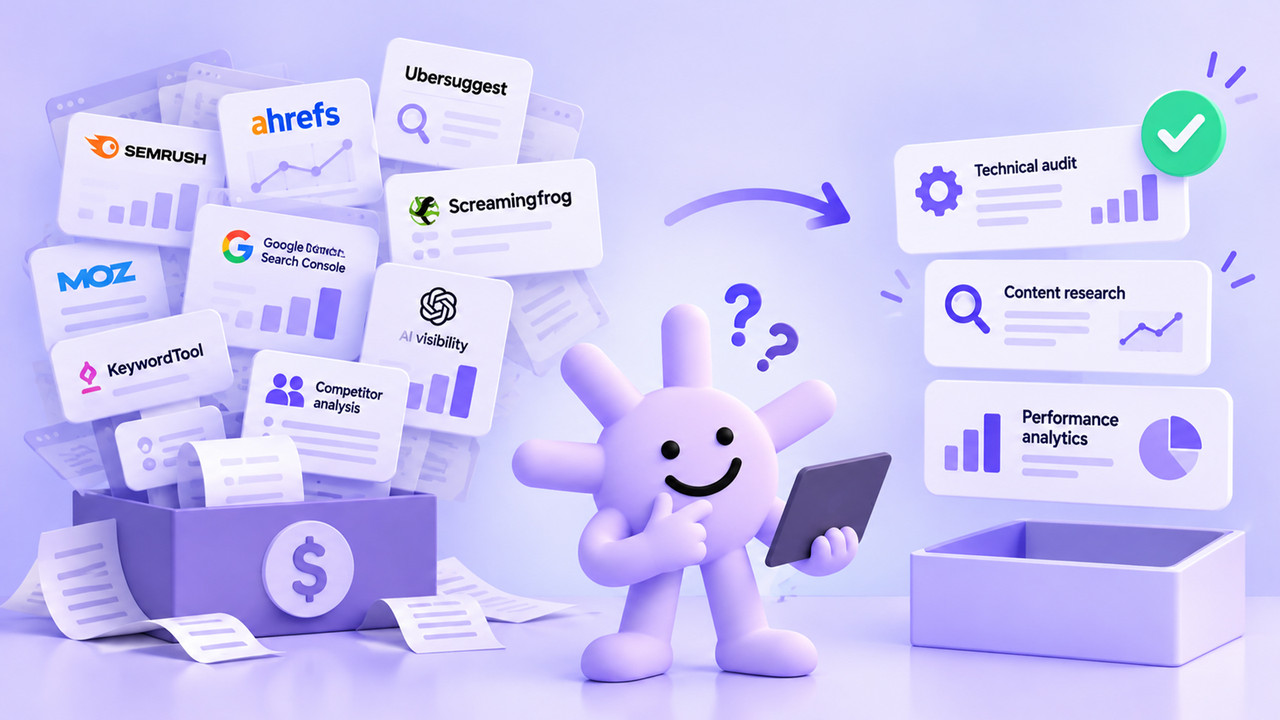
For example, if two platforms provide broadly similar keyword data, purchasing both may provide limited additional value. On the other hand, combining a technical auditing platform with a content research tool and a performance analytics platform may provide more complementary information.
The goal should be a focused technology stack, not the largest possible collection of subscriptions.
How Should a Search Engine Marketing Agency Evaluate Tools?
An experienced search engine marketing agency should not recommend a tool simply because it is popular or widely used.
The appropriate platform depends on the client's objectives, industry, website size, budget, existing technology, and reporting requirements.
For one business, advanced technical crawling may be a priority. Another may need stronger competitor research. A third may be more interested in understanding how its content is being surfaced in emerging AI search environments.
Tool selection should therefore follow strategy.
Before adopting a new platform, businesses should understand what problem it solves, how reliable its data is, how easily the information can be integrated into existing workflows, and whether the resulting insights can lead to measurable action.
What Should Businesses Consider Before Paying for a Tool?
Before purchasing an SEO, GEO, or AEO platform, businesses should evaluate its relevance to their objectives, the reliability of its methodology, the level of overlap with existing tools, and how frequently the team is realistically going to use it.
Free trials can also be useful for testing whether the platform fits the organisation's workflow before committing to a long term subscription.
Most importantly, businesses should avoid assuming that a more expensive platform will automatically produce better results.
Technology can improve the speed and depth of analysis, but it cannot replace strategic judgement. The quality of the decisions made from the data remains just as important as the data itself.
The Right Tool Is the One That Supports Better Decisions
SEO, GEO, and AEO tools can provide valuable information, but their usefulness ultimately depends on how that information is applied.
Businesses should not measure the success of their marketing technology stack by the number of subscriptions they have. They should evaluate whether those tools help them identify opportunities, solve problems, understand customers, improve visibility, and make better decisions.
As search continues to evolve, businesses will likely have access to even more specialised platforms. The ability to evaluate these tools critically will therefore become just as important as using them.
At TSA Media Group, we help businesses develop search strategies based on meaningful data, customer intent, technical performance, and measurable commercial objectives rather than simply adding more tools to the marketing stack.
Let's connect and build a search strategy focused on meaningful insights and measurable growth.
Share this Blog