

The Hidden Digital Bottlenecks Slowing Down Your Business
Digital tools are supposed to make running a business easier. Websites should help customers find information, online forms should capture enquiries, software should reduce repetitive work, and marketing platforms should help businesses reach the right audiences.
Yet many businesses continue to lose time and opportunities because their digital systems are not working together effectively.
These problems are not always obvious. A website may look professional while making it difficult for customers to enquire. Employees may spend hours manually transferring information between systems. Leads may arrive through multiple channels without being properly tracked. Marketing campaigns may generate traffic without providing a clear path toward conversion.
Individually, these issues may seem minor. Together, they can create significant operational friction and prevent a business from getting the full value from its digital investments.
A performance marketing agency can help businesses identify where marketing activity is creating measurable results and where digital bottlenecks are preventing those opportunities from turning into customers.
Is Your Website Creating More Friction Than Value?
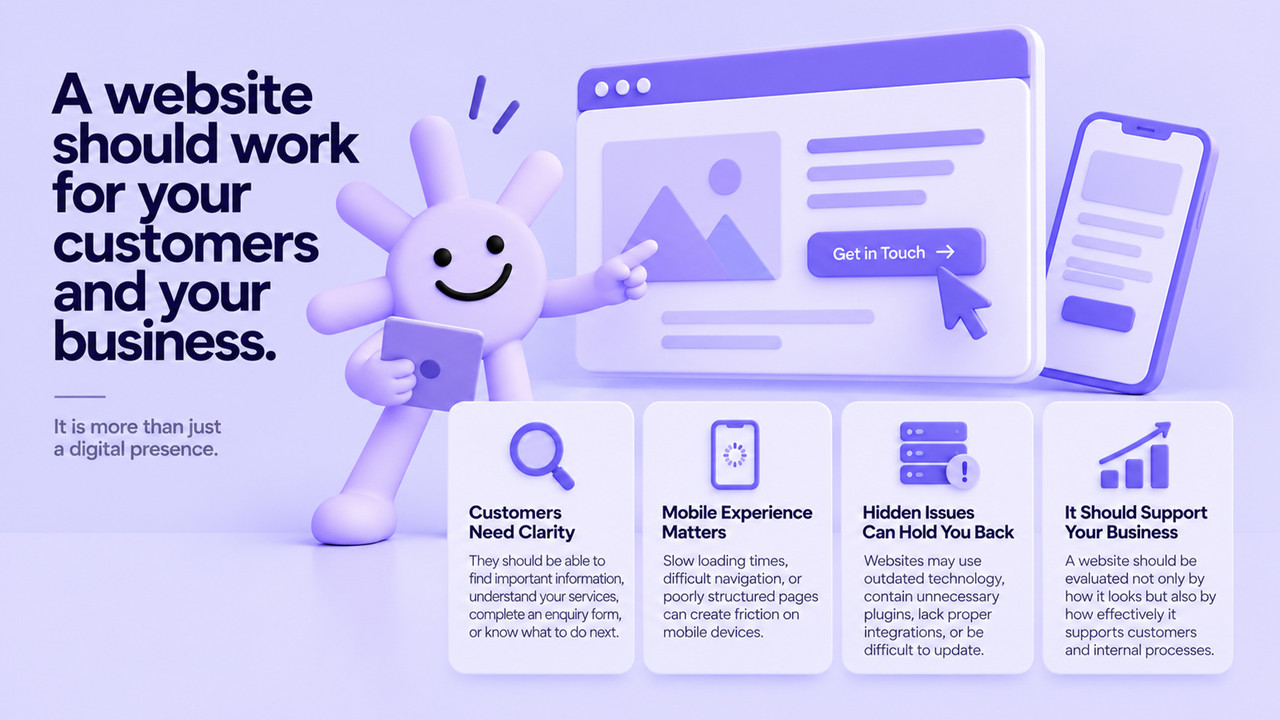
A business website is often one of its most important digital assets, but simply having a website does not mean it is performing effectively.
Customers may struggle to find important information, understand the company's services, complete an enquiry form, or identify what they should do next. On mobile devices, slow loading times, difficult navigation, or poorly structured pages can create additional friction.
There can also be problems behind the visible interface. Websites may use outdated technology, contain unnecessary plugins, lack proper integrations, or make it difficult for internal teams to update content.
A website should therefore be evaluated not only by how it looks but also by how effectively it supports customers and internal business processes.
Are Employees Still Performing Tasks That Could Be Automated?
Repetitive manual work is another common digital bottleneck.
Employees may spend time copying customer information between spreadsheets and systems, sending repetitive emails, updating records, generating reports, or manually following up with leads.
While each individual task may only take a few minutes, these activities can consume significant amounts of working time when repeated every day.
Automation can help businesses reduce this friction by connecting systems and creating workflows that handle predictable tasks automatically. For example, a website enquiry could trigger a notification, update a customer record, assign a lead to the relevant employee, and initiate a follow-up process without requiring several manual steps.
The goal of automation is not simply to reduce the number of tasks employees perform. It is to allow people to spend more time on activities that require judgement, creativity, and customer interaction.
Are Your Leads Getting Lost Between Marketing and Sales?
Generating leads is only one part of the customer acquisition process.
Businesses can invest heavily in advertising, SEO, social media, or content and still lose potential customers because the lead management process is poorly structured.
A customer may submit a form but receive a response several hours later. Another enquiry may arrive through social media and never reach the sales team. Some businesses may not even have a reliable system for identifying which marketing channel generated a particular customer.
These gaps make it difficult to understand the true performance of marketing campaigns.
A performance marketing agency can help businesses establish clearer tracking and conversion processes so that marketing activity can be evaluated based on outcomes rather than surface-level engagement.
Is Your Business Data Scattered Across Different Systems?
Another hidden problem occurs when important information is spread across disconnected platforms.
A business might use one system for customer information, another for accounting, another for marketing, and spreadsheets for internal tracking. Employees then have to manually move information between systems.
This can create duplicated records, inconsistent information, reporting errors, and unnecessary administrative work.
Integrating relevant systems can create a more connected digital environment. Instead of treating every platform as a separate tool, businesses can design workflows that allow information to move between systems more efficiently.
The appropriate solution depends on the business, but the underlying principle is straightforward: employees should not have to repeatedly perform work that technology can reliably handle.
Are Marketing Campaigns Driving Traffic Without Conversions?
Traffic is often treated as evidence that a marketing campaign is working. However, attracting visitors is only useful when those visitors have a meaningful opportunity to become customers.
A campaign can generate thousands of clicks while producing very few enquiries if the landing page, messaging, offer, or conversion process does not match the audience's expectations.
This is where performance focused marketing becomes important. Rather than measuring success exclusively through impressions or clicks, businesses can examine what happens after someone interacts with a campaign.
A performance marketing agency can help businesses connect advertising activity with measurable outcomes such as leads, enquiries, purchases, and customer acquisition costs.
This creates a clearer understanding of whether marketing investment is actually contributing to business growth.
Is Your Business Relying Too Heavily on Manual Reporting?
Reporting can become another hidden drain on productivity.
Teams may spend hours collecting information from different platforms, copying figures into spreadsheets, preparing presentations, and manually updating performance reports.
Apart from consuming employee time, manual reporting can make it harder to identify problems quickly because information may only be reviewed periodically.
Automated dashboards and connected analytics systems can provide businesses with more consistent visibility into performance. Decision-makers can then spend less time collecting data and more time interpreting it.
The objective is not to create more reports. It is to make important information easier to access and act upon.
Are Your Digital Systems Built for the Business You Have Today?
Some digital problems develop because businesses continue using systems that were appropriate when the company was smaller.
A website may have been designed when the company had only a few services. A spreadsheet may have worked when there were ten customers but become difficult to manage after several hundred. Manual processes may have been acceptable when only one employee handled enquiries but become inefficient as the sales team grows.
Digital transformation does not necessarily mean replacing everything.
Sometimes the most valuable improvement is identifying the specific bottleneck that is slowing the business down and addressing it with a targeted solution.
This could involve improving a website, integrating existing platforms, automating a workflow, improving analytics, or restructuring the customer journey.
How Can Businesses Identify Their Hidden Digital Bottlenecks?
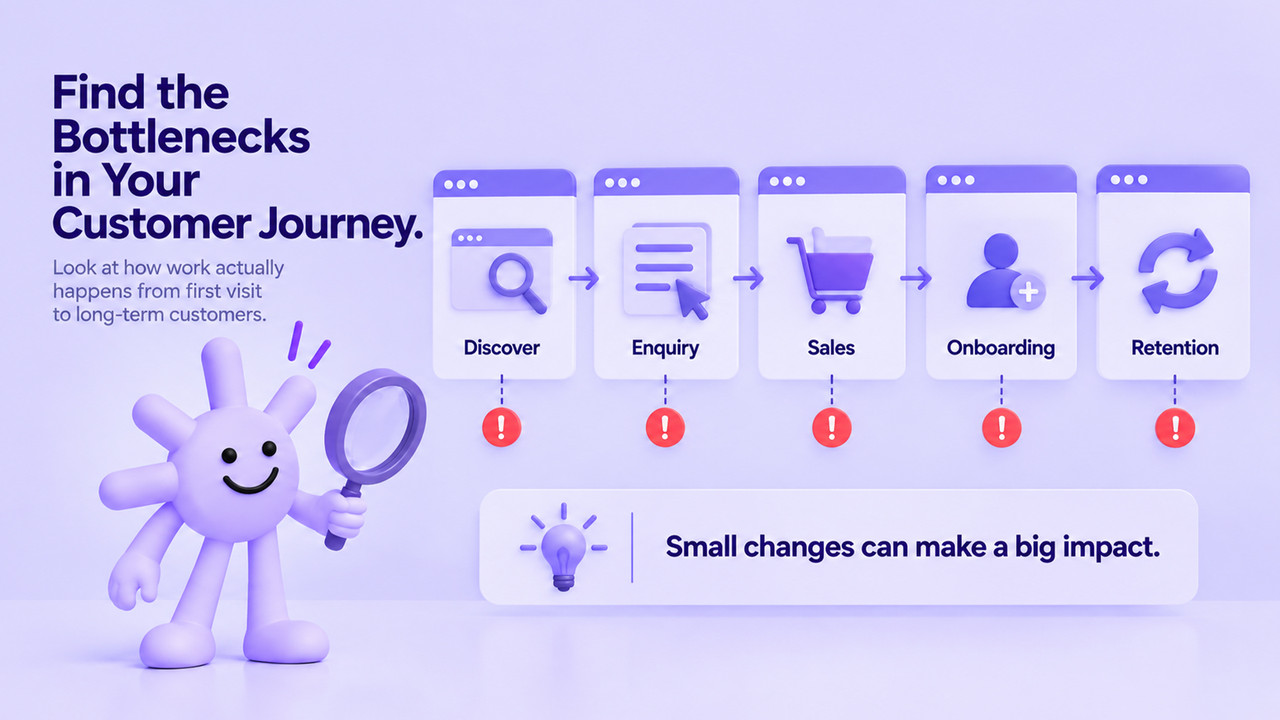
The first step is to examine how work actually happens rather than simply looking at the technology being used.
Businesses should follow the journey from the moment a potential customer discovers the company through to enquiry, sales, onboarding, and retention.
At each stage, it is worth asking where information is being manually transferred, where customers are required to take unnecessary steps, where employees repeatedly perform the same task, and where important data becomes difficult to access.
These observations can reveal problems that may not be visible when individual systems are evaluated separately.
The most effective digital improvements are often not the most complicated ones. A small change that removes a major bottleneck can have a greater impact than introducing an entirely new platform.
Why Should Businesses Fix Digital Bottlenecks Before Scaling?
Scaling an inefficient process can make the underlying problem worse.
If a business is already losing leads because enquiries are handled manually, generating more leads may simply create a larger backlog. If employees are already spending excessive time maintaining spreadsheets, increasing the volume of data can increase administrative pressure.
Digital transformation should therefore be connected to business processes rather than treated as a collection of new technologies.
By identifying bottlenecks before increasing marketing activity or operational volume, businesses can create a stronger foundation for sustainable growth.
Turning Digital Problems Into Growth Opportunities
Hidden digital bottlenecks can affect much more than productivity. They can influence customer experience, employee efficiency, marketing performance, reporting accuracy, and ultimately revenue.
The solution does not always require a complete digital transformation. Businesses can often achieve meaningful improvements by identifying the areas where technology, processes, and people are currently disconnected.
At TSA Media Group, we help businesses connect their digital presence with their broader growth objectives through website development, automation, digital strategy, and performance focused marketing.
Let's connect and identify the digital bottlenecks holding your business back.
Share this Blog