

What Google's Position on GEO Means for Businesses?
Search is changing rapidly. People are no longer relying exclusively on traditional search results to discover information, compare businesses, research products, or find answers to questions. AI generated responses and conversational search experiences are becoming an increasingly important part of how information is accessed online.
This has led to growing discussion around Generative Engine Optimisation, or GEO, and how it relates to traditional SEO. Recent conversations within the search industry have raised an important question for businesses: if AI systems increasingly influence how people discover information, does this mean businesses need an entirely new approach to search?
The answer is more nuanced. Rather than treating GEO and SEO as completely separate disciplines, businesses should understand how the underlying principles of search visibility are evolving. Relevance, useful information, authority, technical accessibility, and a strong understanding of user intent remain important even as the interface through which people search continues to change.
For businesses, this means search engine marketing is becoming broader than simply trying to rank a webpage on a traditional search results page.
What Is GEO and Why Is It Getting Attention?
Generative Engine Optimisation refers broadly to efforts aimed at increasing the likelihood that a brand, organisation, product, or piece of information is surfaced within AI generated responses.
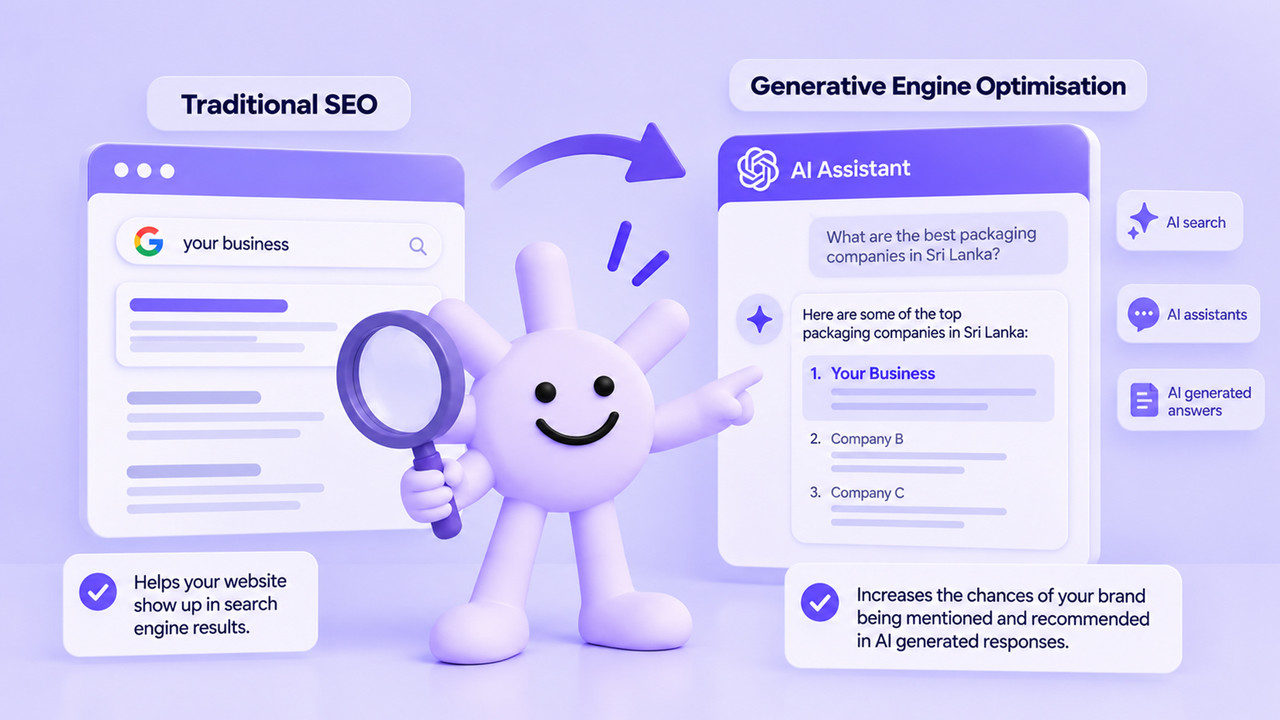
Traditional SEO is largely concerned with helping webpages become discoverable and competitive within search engine results. GEO focuses more heavily on how information is interpreted, retrieved, synthesised, and presented by generative AI systems.
The terminology is still evolving, and there is no universally agreed methodology for GEO.
This is important because businesses should be cautious about treating GEO as a completely established discipline with a fixed checklist of optimisation techniques. The technology and research surrounding AI search are still developing, but what is clear is that the way users interact with search is changing, and businesses need to understand what these changes mean for their digital visibility.
Does GEO Replace Traditional SEO?
One of the biggest misconceptions is that the emergence of AI search means traditional SEO is no longer relevant.
There is little reason to view the two as mutually exclusive.
AI systems still need information to generate responses. Websites, publications, databases, business profiles, and other online sources can contribute to the information available to these systems.
This means that businesses still benefit from having technically accessible websites, clear information, authoritative content, strong brand signals, and useful resources.
The interface may change, but the fundamental need to provide information that can be understood, trusted, and retrieved remains.
For this reason, businesses should think about GEO as part of the broader evolution of search engine marketing, rather than immediately abandoning established search practices.
Why Does Search Intent Matter More Than Ever?
Search has always been about understanding what users are trying to accomplish.
A person searching for "best accounting software" has a different intention from someone searching for "how to create an invoice". Similarly, someone asking an AI assistant to recommend a hotel is looking for a different type of response from someone asking for the history of a destination.
AI interfaces can make these differences even more pronounced because users are increasingly asking complete questions rather than entering short keyword phrases.
Businesses therefore need to understand the questions, problems, comparisons, and decisions that matter to their audiences.
Content should be designed around those needs rather than created simply because a particular keyword has search volume.
Does Creating More Content Improve Visibility in AI Search?
The emergence of GEO could encourage businesses to produce even more content in an attempt to increase their chances of appearing in AI generated responses.
That would be the wrong lesson to take.
More content does not automatically create more visibility. If a website contains dozens of pages that repeat the same information without providing additional value, increasing the volume of content may create little meaningful advantage.
Businesses should instead focus on developing useful resources that demonstrate genuine knowledge and address specific customer questions.
A strong article that clearly explains a complicated topic may be more valuable than multiple shallow pages targeting slightly different keyword variations.
Why Does Brand Authority Matter in AI Search?
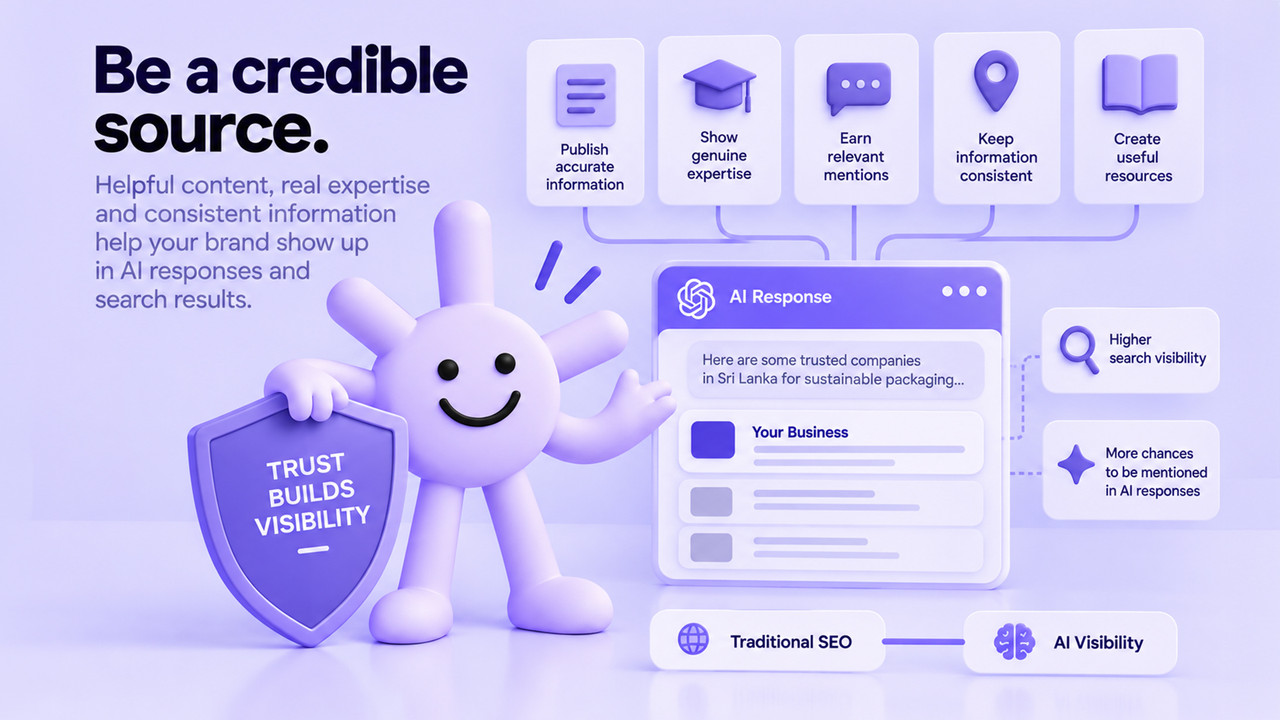
AI systems need to determine which information is useful and credible when generating responses, making the broader reputation and authority of a business increasingly important.
Businesses can strengthen their credibility by publishing accurate information, demonstrating genuine expertise, earning relevant mentions, maintaining consistent business information, and developing useful resources that others can reference.
This is not about trying to manufacture an artificial "AI authority score." Instead, businesses should focus on becoming a recognisable and credible source of information within their particular industry.
Building this kind of credibility can support both traditional SEO and visibility across the broader search ecosystem as user behaviour continues to evolve.
How Should Businesses Adapt Their Search Strategy?
Businesses do not necessarily need to create an entirely separate GEO strategy.
A better starting point is to examine whether their existing digital presence is strong enough to support changing search behaviour.
This means looking at the quality of existing content, technical accessibility, website structure, internal linking, brand mentions, structured information, and the questions being addressed throughout the customer journey.
Businesses should also monitor how their visibility changes as search experiences evolve.
The objective is not to predict exactly how every AI platform will behave. That would be difficult given how quickly these systems are developing.
Instead, businesses can build a digital presence around principles that are likely to remain valuable: useful information, clear expertise, trustworthy sources, strong technical foundations, and a deep understanding of customer intent.
Is Search Becoming More Than Traditional Google Results?
Search is becoming an ecosystem rather than a single results page. Users may discover a company through a traditional search result, an AI generated answer, a social platform, a video, a review, a business listing, or a recommendation from another digital service.
This means businesses need to think beyond individual rankings. Visibility increasingly depends on whether the business is present across the information environments where potential customers are making decisions.
The goal is not simply to achieve a particular position for a keyword, but to ensure that the business has useful, credible, and accessible information wherever relevant search behaviour takes place.
What Should Business Owners Do Now?
Businesses do not need to react to every new acronym or change their entire marketing strategy whenever a new search technology emerges.
Instead, they should start by strengthening the fundamentals.
Websites should provide accurate and useful information. Content should answer real customer questions. Technical issues should not prevent important pages from being discovered or understood. Businesses should demonstrate genuine expertise and maintain a consistent digital presence.
From there, organisations can begin exploring how their content and brand are appearing across AI powered search experiences.
The companies best positioned for changing search behaviour are unlikely to be those that simply chase the latest optimisation tactic. They will be the businesses that consistently provide information worth discovering.
What Does the Future of Search Mean for Businesses?
The relationship between SEO, GEO, and AI search is still developing. Businesses should therefore be careful about claims that any single optimisation technique can guarantee visibility within generative search.
What can be established is that search behaviour is expanding beyond the traditional search results page.
For businesses, this means the fundamentals of digital visibility remain important while the environments in which that visibility is evaluated continue to evolve.
At TSA Media Group, we help businesses develop search strategies that combine technical SEO, content, digital authority, and evolving search opportunities to build sustainable online visibility.
Let's connect and explore how your business can adapt to the changing search landscape.
Share this Blog