

What Is GEO and How Can Businesses Use It?
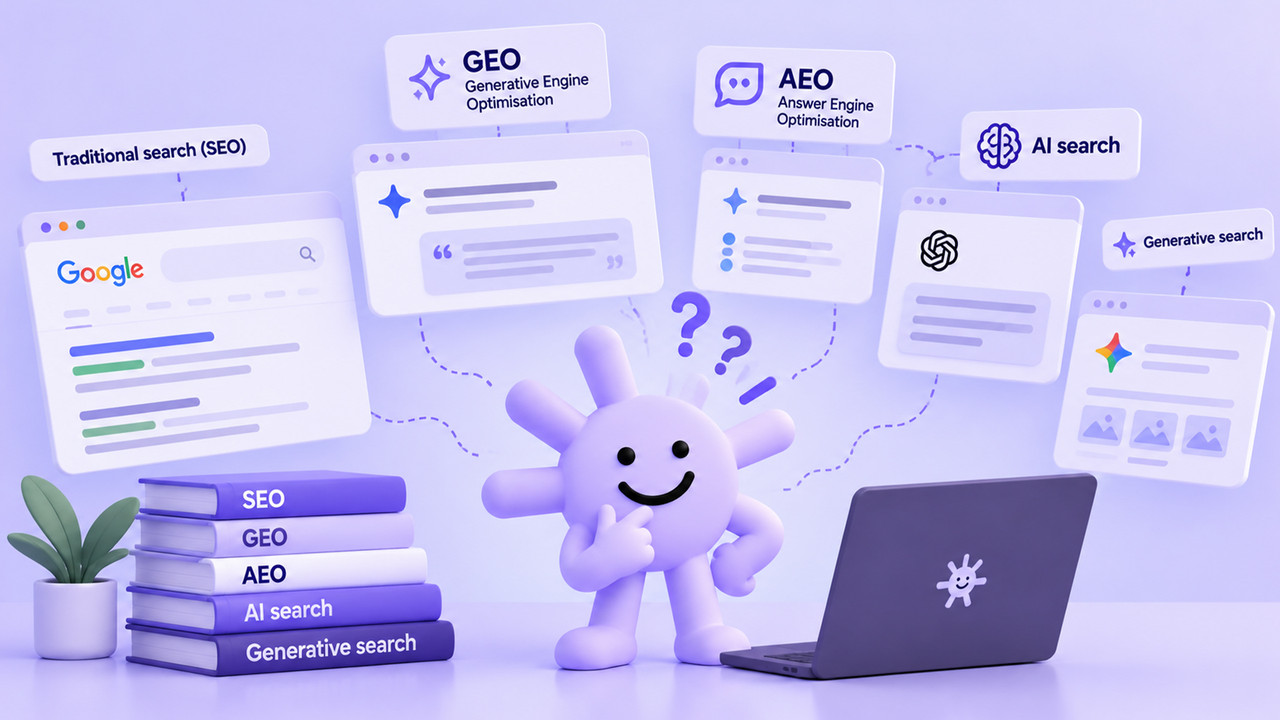
Search is changing, and businesses are increasingly hearing terms such as GEO, AEO, AI search, and generative search. For business owners who are already familiar with SEO, this growing terminology can quickly become confusing. What exactly is GEO, and does it require businesses to completely change the way they approach online visibility?
Generative Engine Optimisation, commonly shortened to GEO, generally refers to efforts aimed at improving how a brand's content and information can be surfaced, referenced, or used within answers generated by AI systems. These include generative search experiences and conversational tools where users receive a synthesised response rather than simply a list of traditional search results.
For businesses, this means understanding how search is evolving and how SEM services can support visibility across both traditional search results and emerging AI powered search experiences.
The important distinction is that GEO is not simply a replacement for SEO. Traditional search optimisation remains relevant as businesses adapt to new ways in which customers discover and evaluate information online.
What Does GEO Actually Mean?
At its simplest, GEO is about making information easier for generative AI systems to understand, retrieve, and potentially use when answering relevant questions.
Traditional SEO generally focuses on improving a website's visibility within search engine results. GEO focuses on a related but different environment, where AI systems interpret information and generate responses based on what they determine to be relevant and useful.
For example, someone might traditionally search for "best accounting firms in Colombo" and receive a page of search results. With a generative search experience, they might instead ask an AI system to recommend accounting firms suitable for a particular type of business.
The way information is presented has changed, but the underlying need for accurate, relevant, and useful information remains.
Is GEO the Same as SEO?
GEO and SEO overlap significantly, which is why treating them as completely separate disciplines can create unnecessary confusion.
A technically accessible website, useful content, clear site structure, relevant authority signals, and strong topical coverage can support visibility across both traditional and AI powered search experiences.
The main difference is the environment in which visibility is being evaluated.
SEO traditionally asks whether a webpage can rank for a relevant search query. GEO asks whether information about a business can be understood and potentially incorporated into an AI generated response.
Businesses therefore do not necessarily need to abandon their existing SEO strategy to explore GEO. Instead, they can build on their existing search foundations while paying attention to how search behaviour is evolving.
Why Are Businesses Paying Attention to GEO?
People are increasingly using AI systems as part of their research process. Instead of searching for individual pages and comparing the results themselves, users can ask detailed questions and receive a synthesised response.
This changes the way businesses think about visibility.
A company can have a strong website and still be absent from an AI generated response if the system does not identify its information as relevant or useful for the particular question.
This does not mean traditional search rankings have suddenly become irrelevant. Instead, businesses now have more discovery environments to consider as search behaviour continues to develop.
The challenge is understanding where potential customers are looking for information and ensuring that the business has a credible presence within those environments.
Is GEO a Completely Established Discipline?
Businesses should be cautious about treating GEO as a completely established discipline with a fixed checklist of optimisation techniques.
The technology and research surrounding AI search are still developing, and different AI systems can interpret and retrieve information in different ways. What is clear is that the way users interact with search is changing, and businesses need to understand what these changes mean for their digital visibility.
This also means businesses should be careful about providers promising guaranteed AI citations, rankings, or visibility through a specific set of GEO tactics.
Rather than chasing a fixed formula, businesses should focus on principles that remain valuable across different search environments: relevance, accuracy, useful information, technical accessibility, and genuine expertise.
How Can Businesses Improve Their GEO Foundations?
There is no universal GEO checklist that guarantees that an AI system will mention a particular business.
A stronger starting point is to improve the quality and accessibility of the information already available about the business.
This means creating content that clearly answers genuine customer questions, providing accurate business information, demonstrating relevant expertise, maintaining a technically accessible website, and developing resources that provide useful context rather than simply repeating keywords.
Businesses should also consider whether their information is consistent across different online sources. Inaccurate or conflicting information can make it more difficult for customers and digital systems to understand the business correctly.
The goal is not to manipulate an AI system with isolated optimisation tricks. It is to create a digital presence that clearly communicates what the business does, who it serves, and why its information is credible.
Does Content Still Matter for GEO?
Content remains an important part of the equation because AI systems need information to generate their responses.
However, businesses should not interpret GEO as a reason to produce enormous quantities of AI generated articles.
Useful content should provide clear answers, relevant context, accurate information, and evidence where appropriate. It should also reflect the questions that potential customers actually ask.
For example, a software company could create detailed resources explaining how its product works, which problems it solves, how it compares with alternative approaches, and what businesses should consider before purchasing.
This type of content can serve users directly while also strengthening the overall information available about the brand.
Does Brand Authority Matter in GEO?
AI systems need to determine which information is useful and credible when generating responses, making the broader reputation and authority of a business increasingly important.
Businesses can strengthen their credibility by publishing accurate information, demonstrating genuine expertise, earning relevant mentions, maintaining consistent business information, and developing useful resources that others can reference.
This is not about trying to manufacture an artificial "AI authority score." Instead, businesses should focus on becoming a recognisable and credible source of information within their particular industry.
Building this kind of credibility can support both traditional SEO and visibility across the broader search ecosystem as user behaviour continues to evolve.
Do Businesses Need a Separate GEO Strategy?
Not necessarily.
For many businesses, the first step should be strengthening the fundamentals of their existing digital presence rather than immediately creating a completely separate GEO programme.
A strong technical foundation, useful content, clear information architecture, credible authority signals, and a good understanding of search intent can provide a foundation for both traditional and generative search visibility.
Once those fundamentals are established, businesses can begin monitoring how their brand and content appear across relevant AI search experiences and identify areas where additional work may be useful.
This is where SEM services can become part of a broader search strategy. Businesses can use specialist support to assess existing search visibility, strengthen content and technical foundations, and identify opportunities as AI assisted search continues to develop.
How Should Businesses Measure GEO?
Measuring GEO can be more complicated than measuring traditional organic rankings.
AI systems can produce different answers depending on the wording of a query, the user's context, the platform being used, and the information available at the time.
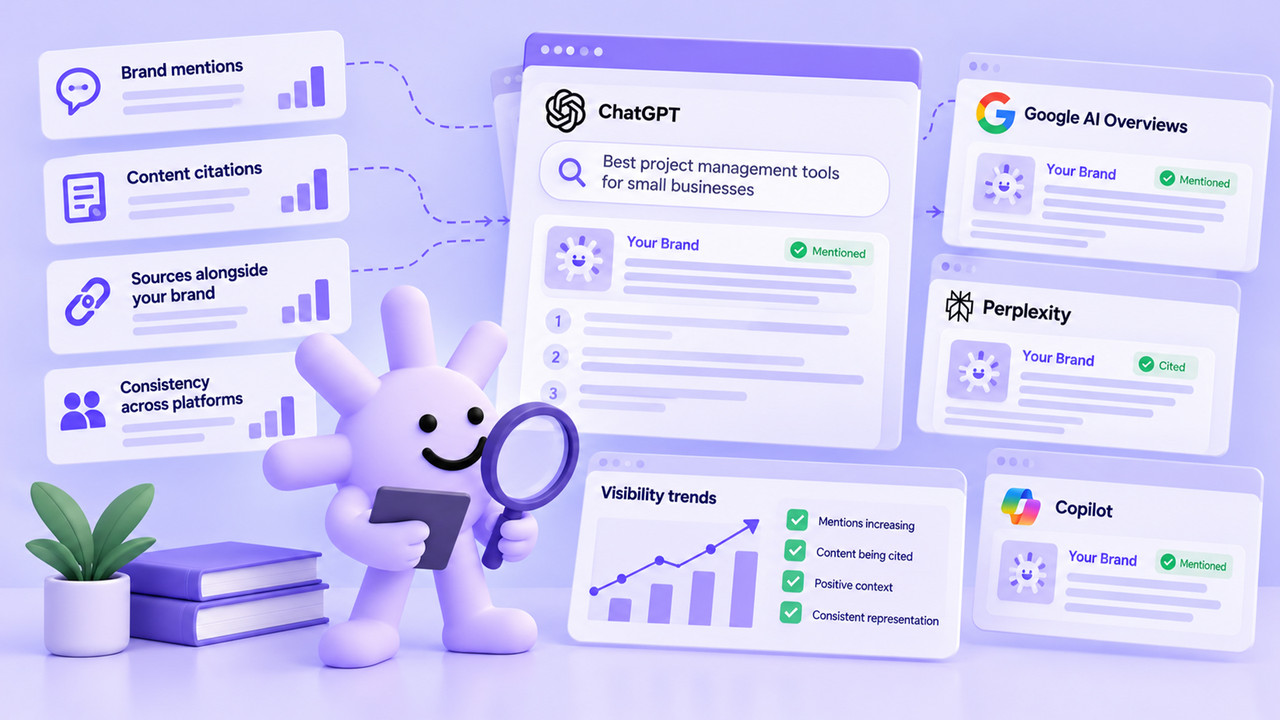
Businesses can therefore monitor indicators such as whether their brand is mentioned for relevant queries, whether their content is cited, which sources appear alongside their brand, and how consistently they are represented across different AI search environments.
These measurements should be treated as directional signals rather than absolute rankings.
The important question is whether the business is becoming more visible and accurately represented when potential customers use AI assisted search to research relevant topics.
What Should Businesses Do About GEO Now?
Businesses do not need to chase every new term appearing in the search industry.
Instead, they should focus on making their digital presence genuinely useful, credible, technically accessible, and easy to understand.
GEO is still an evolving area, and there is no single formula that guarantees inclusion in AI generated answers. What businesses can control is the quality of the information they publish, the credibility they build, and the consistency of their online presence.
As search continues to evolve, these fundamentals are likely to remain valuable regardless of whether a customer discovers a business through a traditional search result, an AI generated answer, a business listing, or another digital platform.
At TSA Media Group, we help businesses strengthen their digital visibility through SEO, content strategy, technical optimisation, and emerging AI search opportunities.
Let's connect and explore how your business can prepare for the changing search landscape.
Share this Blog