


Why Website QA Testing Is Critical for Performance and Conversions?
Website performance issues rarely appear all at once. In most cases, they develop gradually through broken forms, slow loading pages, inconsistent mobile layouts or unnoticed technical errors that quietly reduce engagement over time.
Because these problems often remain invisible during daily operations, businesses may continue investing in marketing while conversion performance weakens beneath the surface.
Website Quality Assurance (QA) testing addresses this gap by introducing structured validation across usability, functionality and technical performance. Rather than reacting to problems after they affect results, QA creates a process for identifying friction before it impacts user experience and lead generation.
For organizations that outsource web development, this becomes even more important because technical consistency must often be maintained across multiple systems, updates and development workflows.
Broken Forms Create Invisible Revenue Loss
Forms are one of the most critical conversion points on a website because they directly connect user intent with business inquiries.
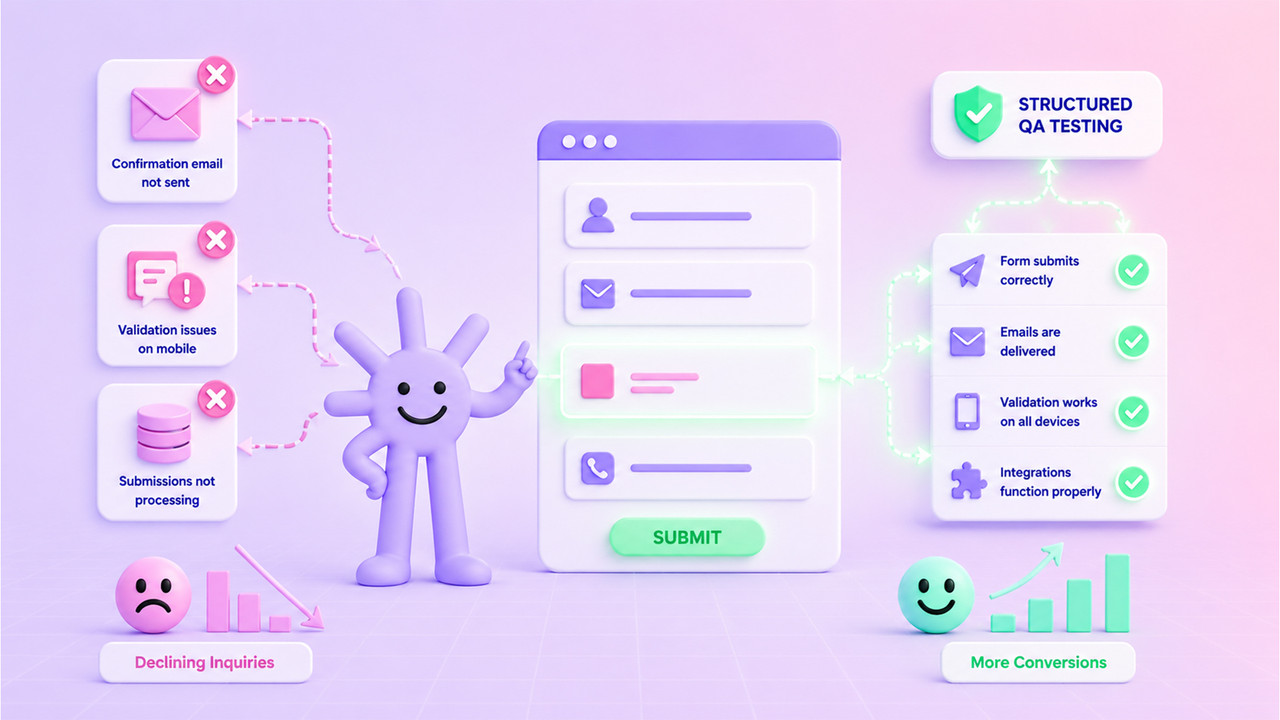
However, forms can fail in ways that are not immediately visible. Submissions may stop processing correctly, confirmation emails may not be sent or mobile users may encounter validation issues that prevent completion.
These failures rarely generate immediate alerts. Instead, businesses notice declining enquiries without understanding the underlying cause.
Structured QA testing ensures forms submit correctly, integrations function properly, validation behaves consistently and user flows remain uninterrupted across devices and browsers. This reduces the risk of losing potential customers through preventable technical issues.
Page Speed Directly Influences Engagement
Website speed affects how users perceive credibility, professionalism and usability.
Even small delays increase friction throughout the customer journey. Pages that load slowly reduce engagement, increase bounce rates and weaken conversion performance.
QA testing helps identify oversized assets, inefficient scripts, rendering bottlenecks, third party conflicts and mobile performance issues before they begin affecting user behaviour.
These problems often accumulate gradually, particularly when businesses outsource web development and multiple tools or updates are introduced over time.
Performance testing ensures that websites remain responsive while maintaining a consistent experience across platforms.
Mobile Usability Determines Experience Continuity
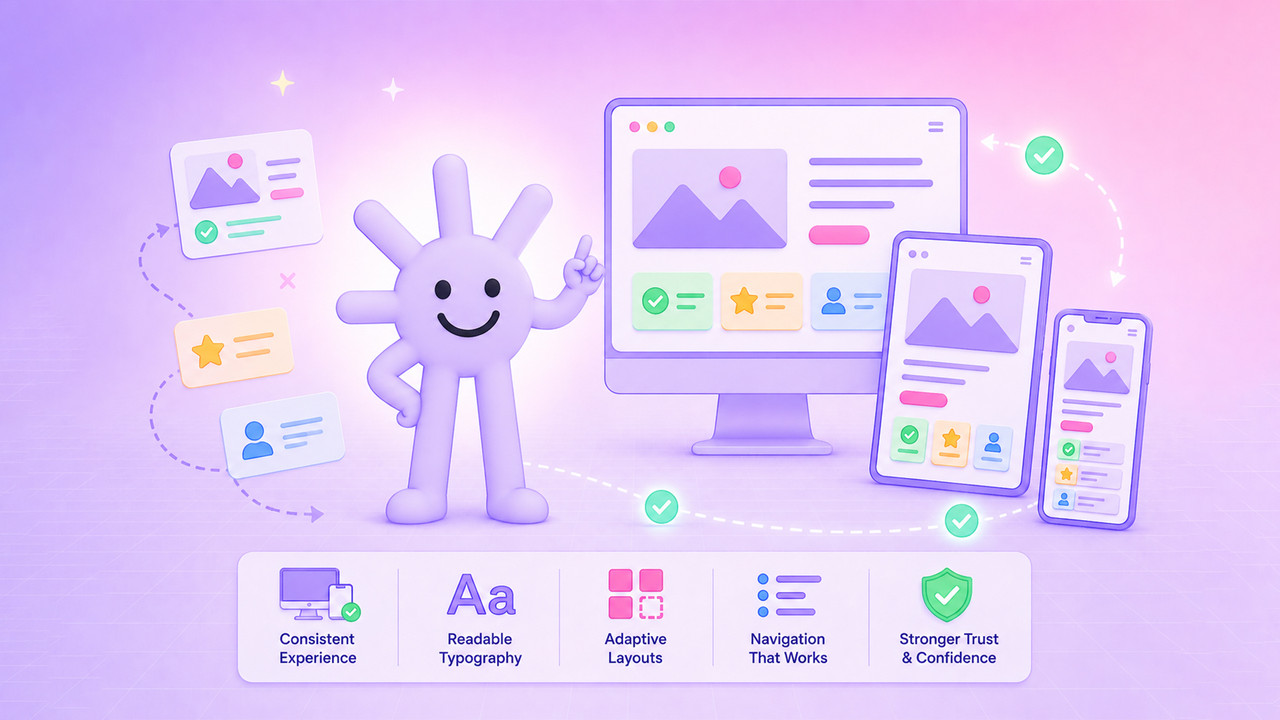
Modern users move between devices constantly. A website that performs well on desktop may still create usability problems on smaller screens.
Overlapping layouts, inconsistent spacing, unreadable typography and navigation failures weaken usability and reduce trust because users experience the brand differently across platforms.
QA testing validates how layouts adapt under different screen conditions while maintaining visual structure, usability and interaction consistency.
This continuity strengthens overall brand perception and improves user confidence throughout the browsing experience.
Technical Errors Affect Search Visibility
Technical website issues influence more than usability. They also affect discoverability.
Search engines evaluate page speed, mobile performance, crawlability, metadata structure, broken links and server reliability when determining rankings.
When these areas are neglected, rankings and visibility gradually decline.
QA processes help identify technical weaknesses before they affect search performance, allowing businesses to resolve issues proactively rather than responding after traffic decreases.
Regular QA Audits Prevent Hidden Performance Decline
Many website problems emerge slowly rather than appearing immediately after launch.
Software updates, plugin conflicts, third party scripts and infrastructure changes can gradually introduce performance instability, layout inconsistencies, broken integrations and security vulnerabilities.
Without regular audits, these issues continue accumulating until user experience and conversions are affected.
Structured QA reviews create an ongoing system for monitoring website reliability, helping businesses maintain stability as platforms evolve.
Why Website QA Testing Supports Long Term Growth
Website QA testing is ultimately about maintaining operational consistency.
When websites function reliably, users engage more confidently, conversion journeys remain uninterrupted and technical risks are reduced before they become costly problems.
By contrast, unnoticed technical issues quietly reduce performance even when marketing efforts remain active.
For organizations that outsource web development, QA provides an additional layer of structured oversight that helps maintain quality across updates, platforms and future growth initiatives.
At TSA Media Group, website QA is approached as a structured process focused on usability, performance and long term reliability. By identifying technical issues before they affect user experience, we help businesses protect conversions, strengthen website performance and maintain operational consistency.